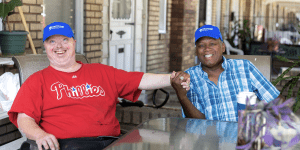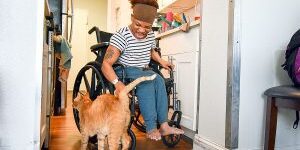

Situated on a quaint street in Pottstown, PA, sits a charming ranch-style house with red brick, shutters, and a newly installed ramp for wheelchair users. What looks like a cozy private residence is KenCrest’s original Smarter Living Home, the first of two locations where people can explore assistive technology and discover new possibilities for greater independence.
Today, KenCrest operates Smarter Living Homes in both Pottstown and Philadelphia. The Philadelphia location, which opened in 2026, expands access to hands-on demonstrations of assistive technology and accessibility features that help people with intellectual and developmental disabilities live more independently and safely in their communities.
The idea for the Smarter Living Homes began in 2019 after an assessment of KenCrest's community residences highlighted opportunities for technology to support greater independence. The team recognized that many everyday tasks—such as controlling lights, adjusting thermostats, managing reminders, and communicating with support networks—could be made more accessible through readily available assistive technology.
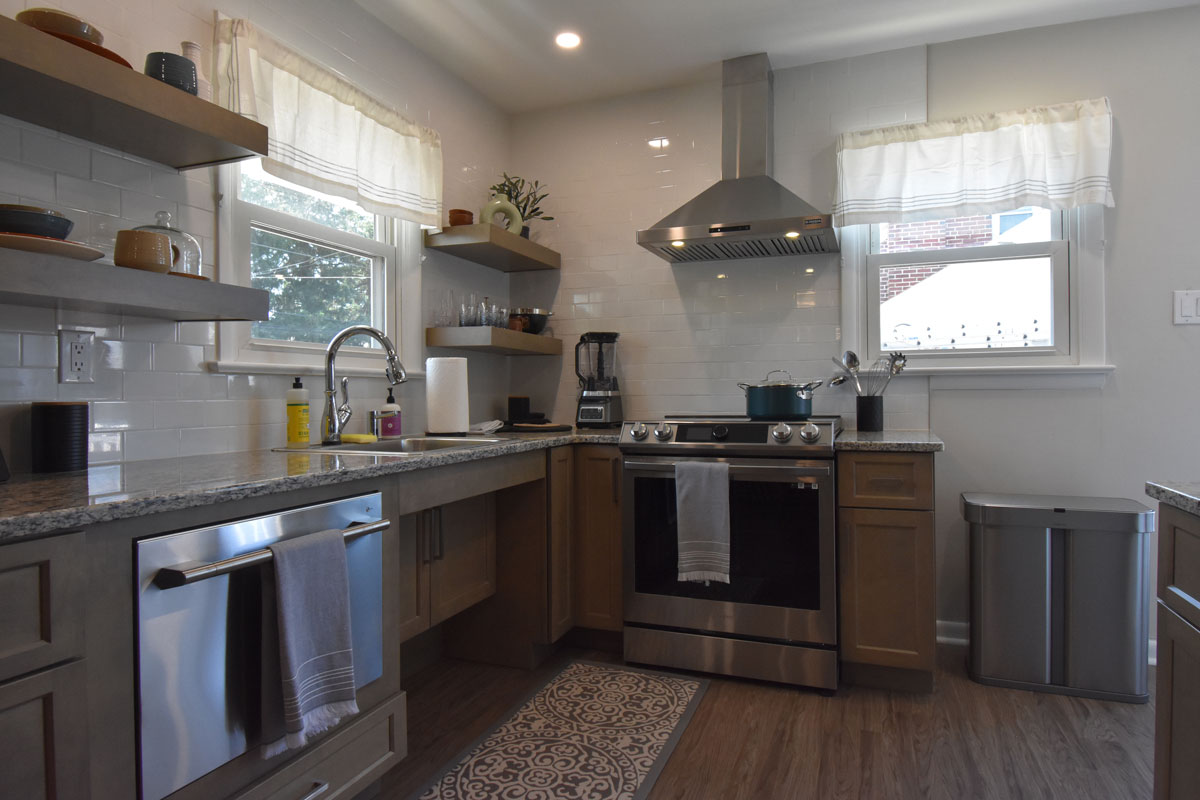
The Smarter Living Home's kitchen // Photos by Aubrey Hoffert
From there, staff saw an opportunity to help more people live independently by creating a space where individuals and families could experience these technologies firsthand. That same year, a proposal was submitted to KenCrest's New Business Ideas (NBI) initiative—a grant opportunity that develops innovative models and services to benefit stakeholders and programs—to create a model Smarter Living Home featuring a wide range of technology solutions that could be used in homes and community settings.
"We were the recipient of the first round of NBI funding and were able to use that money to not only include tech into the home but also add a lot of accessibility features like having ADA-compliant countertops, open kitchen shelving instead of cabinets because not everyone can open a cabinet," says a former staff member. "We did a drawer dishwasher instead of your traditional drop-down, and all the kitchen appliances are smart and accessible through an app."
Throughout the home, accessibility is integrated into everyday living. The bathrooms include features such as tilt mirrors, touchless faucets, smart toothbrushes, and a combination washer-dryer unit for easier access. Furniture with rounded edges promotes safety, while adjustable work surfaces help accommodate a variety of mobility needs.

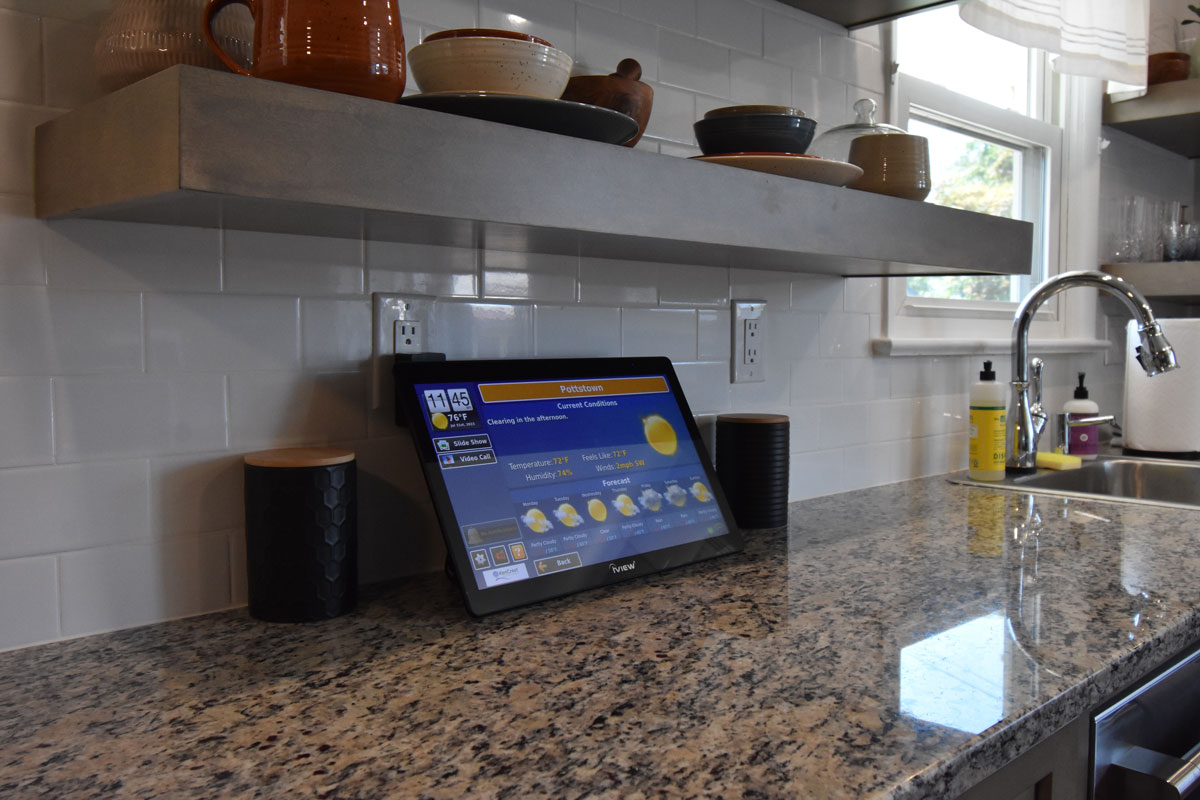
The Care Tablet set up on the kitchen counter // Photos by Aubrey Hoffert
But accessibility features are only part of the experience. Numerous Care Tablets located throughout the home allow users to monitor health metrics, create tasks and reminders, and access guided prompts that support daily living.
Each room also includes voice-activated technology that can assist with everyday tasks such as operating appliances, adjusting the home's temperature, filling a coffee pot, or opening and closing blinds.
"Almost everything in the house is kind of off-the-shelf technology anyone can access," says Tim Bosch, the VP of Workday Integration and Administration who assisted in the setup of the first Smart Home.
The homes also showcase emerging technologies, including the Amazon Astro, a household robot that uses Amazon Alexa technology and intelligent motion to monitor and navigate a home independently. Astro can be remotely sent to specific rooms and can support household monitoring and safety needs.

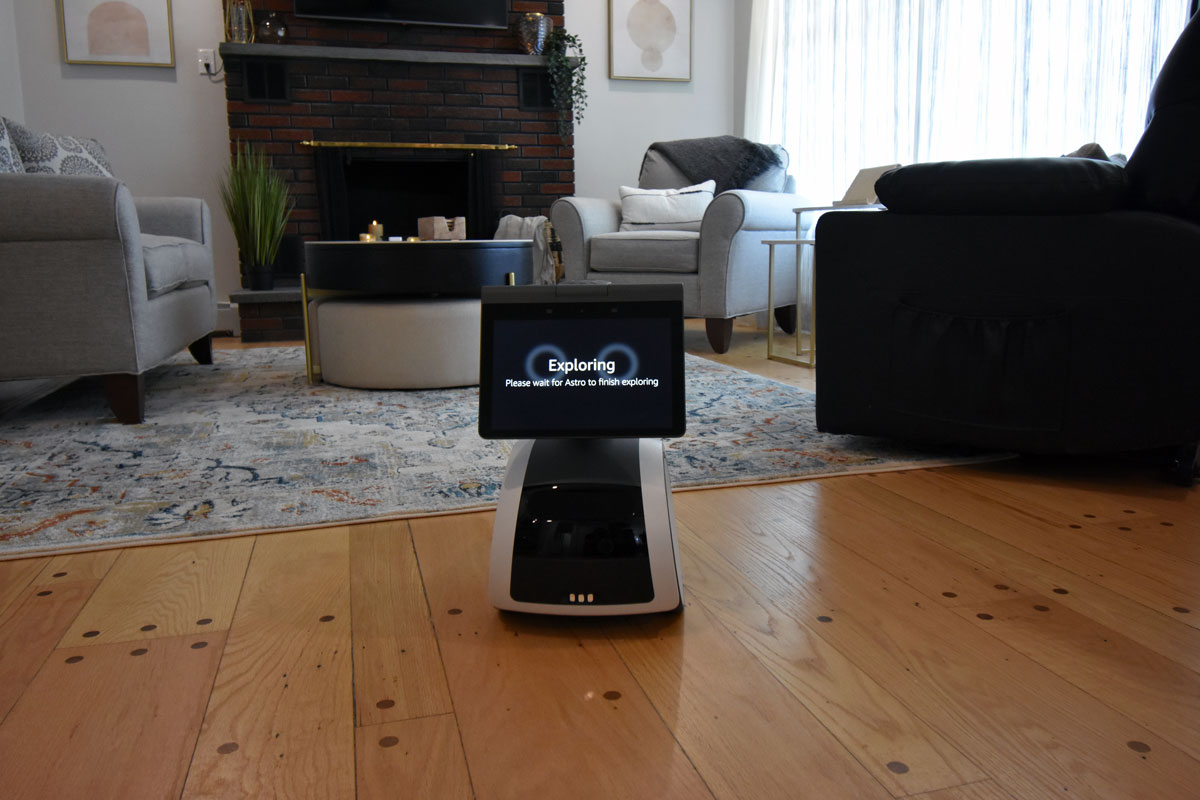
The Amazon Astro robot exploring the Smarter Living home // Photo by Aubrey Hoffert
While trialing Astro, the robot learned her children’s faces, voices, and names. So, when they were home without her, she could ask Astro to find them, which would do precisely that. Users can even remotely access the robot in an emergency to check whether the doors are locked or the stove is off.
From the beginning, the goal of the Smarter Living Homes has been to introduce people to enabling technology in a private, hands-on environment. Prior to the development of the homes, individuals often had to visit someone's personal residence to see assistive technology in action.
The Smarter Living Homes were designed to provide a dedicated space where people can explore and trial technology solutions without intruding on someone's private living environment. Today, with locations in both Pottstown and Philadelphia—the newest home opening in 2026—KenCrest is expanding opportunities for individuals, families, and professionals to experience enabling technology firsthand.
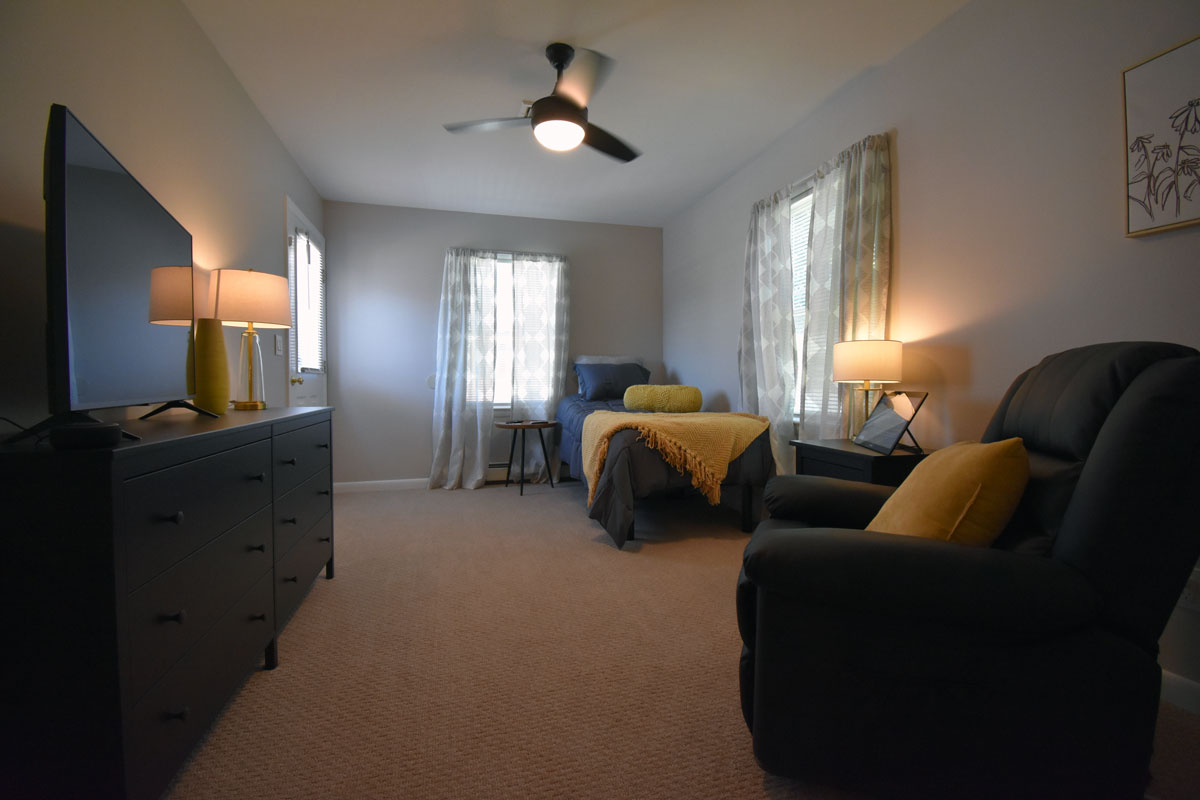
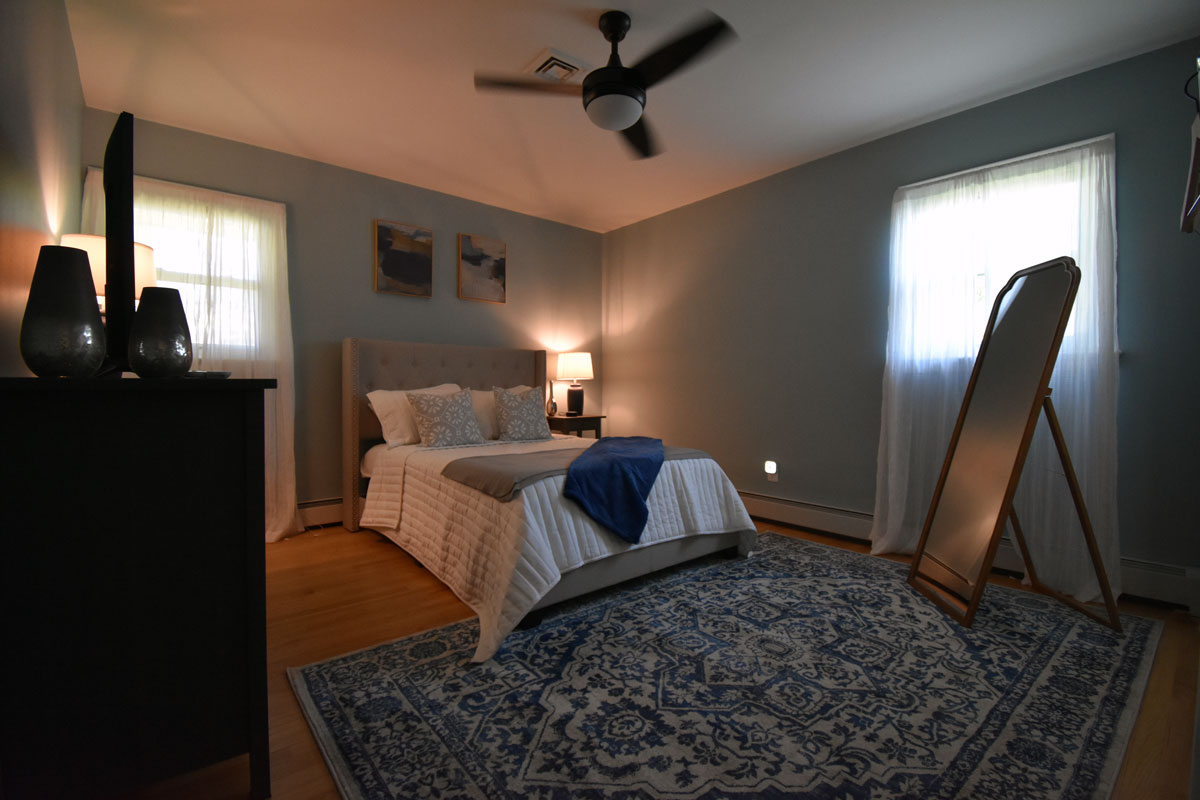
Two bedrooms in the Smarter Living home // Photos by Aubrey Hoffert
"There are many discussions and plans for the home moving forward," says Gregg Kelinson, Assistant Vice President of Innovation at KenCrest. "These consist of, but are not limited to, individuals using the home for alone time and demonstrations of independence while remaining safe with remote monitoring support. We hope to educate the community and stakeholders about how Smarter Living Home devices and remote supports help individuals make dreams possible."
The Smarter Living Homes will also house KenCrest's Enabling Technologies Lending Library, allowing the organization to conduct onsite assessments and provide technology tools for people to borrow and trial before making a purchase.