

A child’s first years are full of movement. A baby pushes up from the floor. A toddler reaches for a toy. A child pulls to stand beside the couch, takes one careful step, then another. These moments may look small from the outside, but for a family that has been practicing and waiting, they can feel significant.
During National Physical Therapy Month, KenCrest is recognizing the physical therapists on our Early Intervention team and the role they play in supporting children and families. Their work is not only about strength, balance, or coordination. It is about partnering with families during important years of development so each child can participate more fully in everyday life.
For infants, toddlers, and young children, physical therapy often begins with a question from a parent or caregiver: Is my child moving the way they should be? A baby may not be rolling over yet. A toddler may need support with standing, walking, climbing stairs, or moving safely through daily routines.
Those questions can bring uncertainty. They can also open the door to support.
What Does a Physical Therapist Do in Early Intervention?
A physical therapist helps children build movement skills for daily life, including strength, balance, coordination, posture, and motor skills for sitting, crawling, walking, climbing, playing, and exploring.
At KenCrest, physical therapy happens in places children already know, including home, childcare, and community settings. Support is built into familiar routines such as floor play, outdoor time, getting dressed, or moving through a classroom.
A KenCrest physical therapist might show a caregiver how to use a favorite toy to encourage reaching, weight shifting, or standing. They may also partner with childcare providers so a child can take part more comfortably during playtime or transitions.
That family-centered coaching approach is at the heart of KenCrest’s Early Intervention services. Parents and caregivers know their children best: what motivates them, what routines work, and where support is needed. KenCrest’s therapists build on that knowledge, helping families use everyday moments as opportunities for growth.

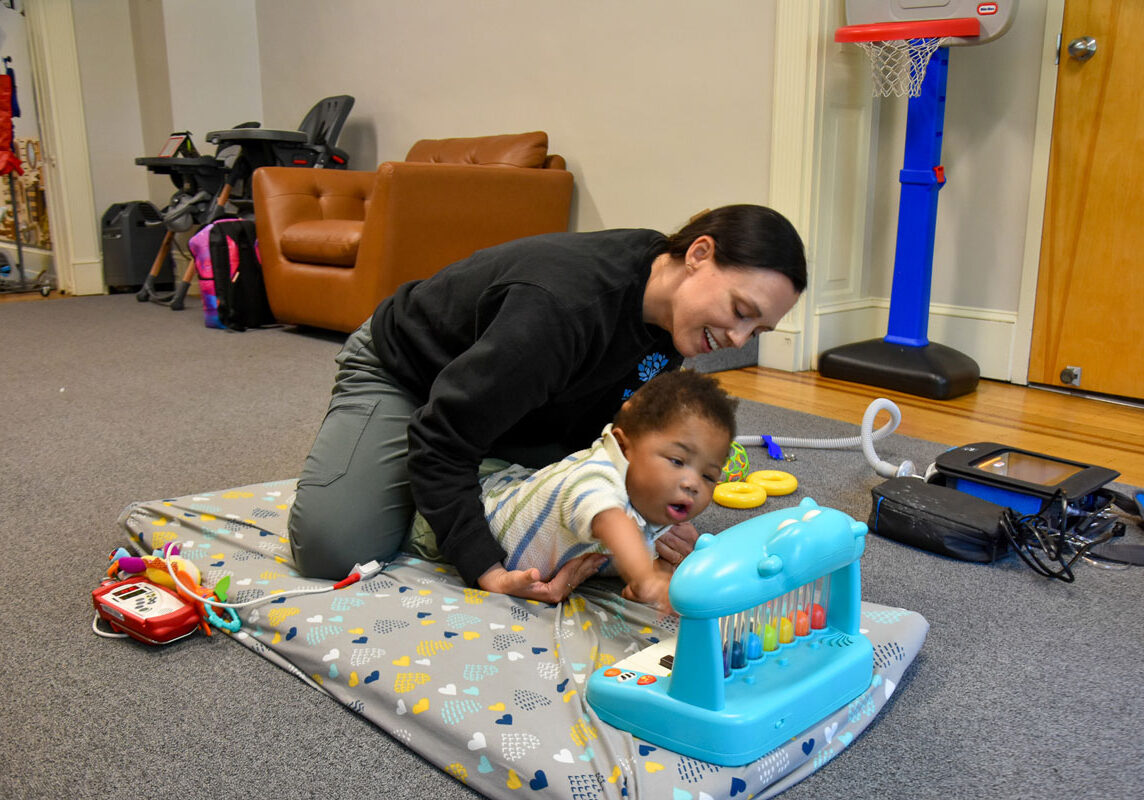
Small Steps, Meaningful Progress
Progress in Early Intervention does not always happen all at once. Sometimes it comes through repetition, patience, and trust.
It may look like a child sitting independently while playing with a sibling, taking supported steps across a room, or learning to move safely through a childcare classroom or family routine.
For families, those milestones can be deeply personal. They are not just developmental markers. They can change what daily life feels like.
KenCrest’s Early Intervention team supports children from birth to age three in Pennsylvania, with some services continuing beyond age three depending on a child’s needs and local system pathways. Physical therapists are part of a broader team that may include occupational therapists, speech therapists, nutrition professionals, special instructors, behavioral support specialists, social workers, and other professionals who support the whole child and family.
Physical therapists help families understand how movement connects to play, exploration, communication, confidence, and participation. When a child can move more comfortably through their environment, they often have more opportunities to engage with the people and routines around them.
The focus is participation: helping children engage with favorite toys, people, activities, and routines in ways that fit naturally into family life.
This National Physical Therapy Month, KenCrest recognizes the dedication, creativity, and care of our Early Intervention physical therapists. Their work happens in living rooms, childcare centers, play spaces, and community settings across the region, supporting families as children practice new skills and take part in everyday routines.
If you have concerns about how your child is moving, playing, or meeting developmental milestones, Early Intervention can help your family understand your child’s needs and connect with support.
KenCrest’s Early Intervention team works alongside families, one routine and one milestone at a time.
Read More Stories From KenCrest








Let's Keep in Touch
Join the KenCrest team and stay updated on the latest news in the disability community, inspiring stories, and ways you can help us make a difference in the lives of people with an intellectual or developmental disability.