

Before Malakai could come home, Ashley Taylor had to learn what home would need to look like for him. Malakai was born at just 24 weeks and six days, weighing one pound, six ounces. For the next 11 months, the hospital became part of his family’s routine: the steady sounds of machines, the rhythm of appointments, and the questions that came with each new step.
“He’s been through a lot,” Ashley said. “He has overcome more than any of us ever really expected.”
For Ashley, leaving the hospital without her child was heartbreaking. She visited, learned his care, and carried the worry of each next step. As Malakai grew stronger, the question became what would happen between hospital care and home. He still needed support for complex medical needs, and Ashley needed time to keep learning his routines in a setting closer to the life they were working toward together.
That is how Ashley first connected with KenCrest’s Children’s Transitional Homes. The program supports children who no longer need hospital care but are not yet ready to be cared for safely at home. In a quieter, more personal setting, children receive skilled, individualized care while families practice the routines they will one day carry into daily life, from medications and equipment to breathing support.
Before Malakai moved into KenCrest’s Children’s Transitional Home, Ashley had already met members of the KenCrest team while he was still in the hospital. When she saw those familiar faces ready to welcome him, the move felt less like entering another clinical setting.
“It was a weight lifted off my shoulders,” Ashley said. “I wanted him home, but they wanted to make it less complicated for me for when he does come home, and I was very, very appreciative of that.”
The team learns from families, who know their children best—the toys that catch their attention, the voices that calm them, and the small expressions that mean they are content. For Malakai, those details are part of his daily care, alongside the equipment, routines, and training Ashley continues to learn.
For Ashley, that approach made a difference. The team kept her involved in appointments, care decisions, and continued her training with Malakai's trach care, feeding tube, ventilator, and daily routines that she began learning in the hospital. It gave her space to ask questions, talk through changes, and keep practicing the skills she will rely on.
For Malakai and Ashley, the goal is bringing him home safely.
One major goal is helping Malakai spend more time off the ventilator. At a recent pulmonology appointment, Ashley said he completed a short trial off the vent and did “really, really well.”
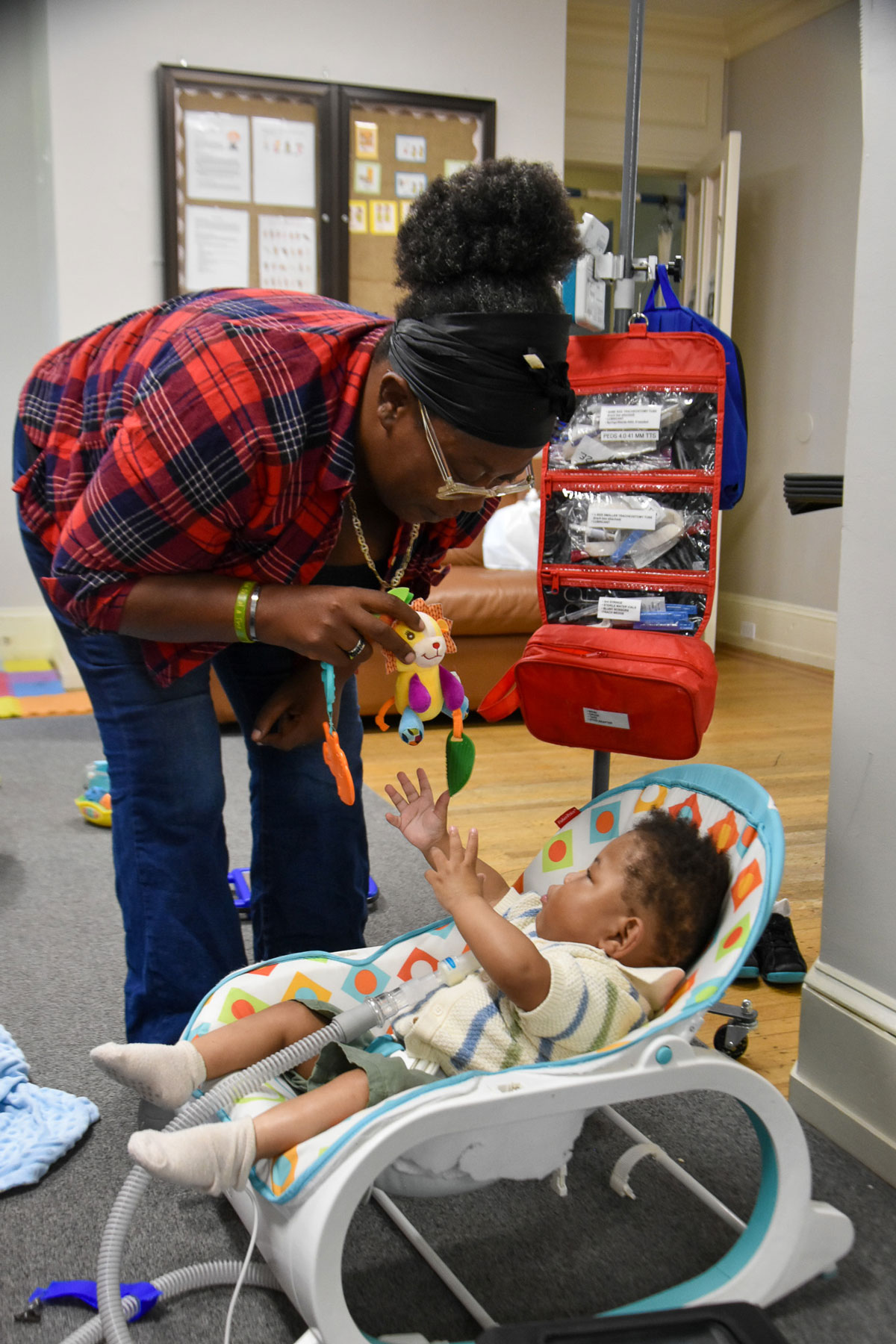
In the meantime, Malakai is growing. Since arriving at the Transitional Care Home, he has become more engaged, playful, and expressive. He loves hearing people talk, focuses more during play, and has improved his range of motion through physical therapy, occupational therapy, and speech therapy.
“I think he’s grown since he’s been here. He’s much happier, a lot more playful, and he’s started to develop a lot more than what he was,” Ashley said.
“When Malakai first arrived, he seemed shy or overwhelmed, and it took a lot to get a smile,” adds Kate Brown, the Care Coordinator at KenCrest’s Children’s Transitional Homes. “Now, he is the happiest little guy with the best dimple smile. He has such a little spunky personality.”
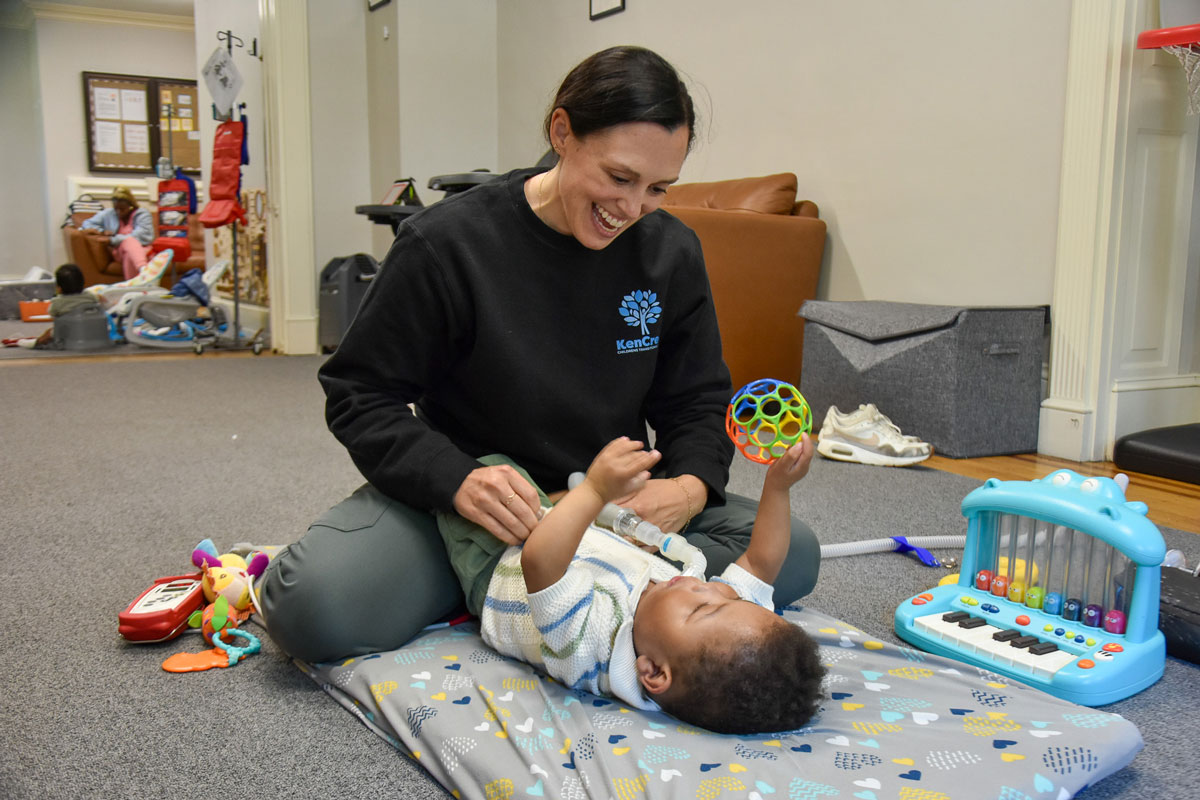
Malakai’s family notices those changes, too. Ashley often calls relatives during visits so they can see him move, hear the sounds he makes, and watch his personality come through in real time.
Part of coming home will mean helping family members understand Malakai’s routines and care needs. As he grows stronger and more active, Ashley and the team are thinking through who will be involved, what they need to learn, and how care will fit into daily life.
Every child’s path through transitional care looks different. For Malakai, that path includes respiratory support, continued therapy, family training, and more. While other children at the home, are moving through their own versions of that transition. Jordan, who is 4 years old, uses his communication device, or “talker,” to share what he wants, answer questions, and connect through his interest in animals, especially ocean animals.
Leylanie’s transition followed a different path. After nearly three years with KenCrest, she graduated from the program a few years ago and moved home. Today, she is thriving with her parents and family by her side.
Malakai’s path is still unfolding, one step at a time. As Ashley looks ahead to bringing him home, she thinks about the everyday moments still to come: more time with family, more familiar voices around him, and more chances for the people who love him to know the little pieces of his personality that are emerging every day.
“I never gave up,” she said. “That was my biggest priority for myself and my family—to not give up on him.”
Read More Stories From KenCrest's Possibilities Fall 2026 Magazine







Let's Keep in Touch
Join the KenCrest team and stay updated on the latest news in the disability community, inspiring stories, and ways you can help us make a difference in the lives of people with an intellectual or developmental disability.