

Like many young adults, Mateo reached the end of high school ready to begin something new. Graduation marked an important milestone and the start of a chapter defined by new opportunities, choices, and goals for adulthood.
Just two days before his 22nd birthday, Mateo finished high school and began envisioning what came next. As he and his family explored options for life after the classroom, they looked for ways to build on the routines, relationships, and strengths that had helped him thrive.
Through KenCrest’s Meaningful Day program in Delaware, Mateo has begun building a new rhythm, one shaped by community outings, volunteer work, and steady opportunities to grow. His days are not rushed or one-size-fits-all. They are built one experience at a time, around the places he enjoys, familiar faces he recognizes, and the confidence he is still discovering in himself.
At the food bank, where he volunteers, Mateo has a role that matters. He stocks shelves, keeps items organized, and helps ensure the food bank runs smoothly. Through his work, he contributes to his community, builds confidence, and takes pride in knowing he is helping others.
The value of these experiences extends beyond the tasks themselves. Through work and volunteering, Mateo has built relationships, established routines, and found meaningful ways to contribute—elements that help create a fulfilling adult life.
“He likes the staff at the food bank too,” Toni, his mother, said. “He’ll say, ‘Is so-and-so going to be there?’ He’s really good with the names and looks forward to seeing some of the people who are there on a regular basis.”
After leaving the familiar structure of high school, Mateo has found new opportunities to build connections in his community. He has become someone people recognize and look forward to seeing, a familiar face whose presence matters to those around him.
Meaningful Day is designed for moments like these. The Delaware program is 100 percent community-based and offers one-to-one support for adults with intellectual and developmental disabilities, helping each person build skills, explore interests, and participate in everyday life.
Makila Cook-Williams, Meaningful Day Coordinator in Delaware, said many families are looking for something different as their loved ones move from student services into adult services. KenCrest connects with high schools, transition fairs, provider fairs, and support coordinators to help families understand their options.
“A lot of people join Meaningful Day because they find interest in that one-on-one community support,” Makila said. “They want to do their own thing. They want to build on their social skills, their independence.”
That kind of support is what makes Meaningful Day personal. For Mateo, it has meant having time to build confidence at his own pace, in places where he is starting to feel known. With support from the Longwood Foundation, more adults in Delaware will have that same opportunity. The foundation awarded KenCrest $50,000 for 2026 and 2027 to help Delaware’s Meaningful Day program expand their impact and reach 24 adults with intellectual and developmental disabilities. For each person, that can mean more chances to practice everyday skills, build relationships, and spend time in the community in ways that feel meaningful to them.
For Mateo’s family, that personal approach was exactly what made Meaningful Day feel like more than a program. It felt like a bridge between the life he had known in school and the adult life his family hoped he could continue building in the community.
Toni toured several day programs after asking their community navigator for options. Some settings felt overwhelming. Others were more facility-based. Meaningful Day stood out because Mateo would be supported one-on-one and spend his time out in the community.
Mateo’s outings vary from week to week, from the YMCA and Longwood Gardens to museums and lunch in the community. Outside of Meaningful Day, he also participates in Special Olympics, including tennis, basketball, swimming, soccer, and bowling. But Meaningful Day gives him structured time with support from an adult who can help guide him through each experience.
That structure has helped Mateo settle into a rhythm of his own. Toni said he gets excited when he sees his schedule, asks questions about what is planned, and wakes up ready to go on Meaningful Day mornings. For a parent watching her son enter adulthood, those moments are small signs of something deeply important: he is looking forward to his days.
“I don’t feel like he’s as nervous,” she said. “The more he becomes comfortable with the program, the more at ease he seems.”
That comfort has also helped Mateo adjust to change. Toni said staff transitions can be hard, but each new staff person has brought something different to the experience. With time and support, Mateo has learned to adapt while meeting new people and continuing to move forward, skills that matter far beyond any single outing.
In Meaningful Day, independence is not treated as something that happens all at once. It is practiced slowly and patiently, in everyday choices: looking at a schedule, trying a new activity, speaking up about preferences, or realizing that his voice is part of the plan.
“We also work on choices,” Makila said. “It’s not what we want for you. It's what would you like? This is your life. When I speak with Mateo, he’s like, ‘Ask Mom,’” Makila said. “And I’m like, ‘No, Mateo, we’re asking you. This is for you.’”
For Mateo, decision-making is still growing. Toni said he often prefers to have a schedule given to him, but he can say when he does not want to do something or when an activity is not his favorite. That, too, is independence: learning that his preferences matter, and that the adults around him are listening.
For Makila, the heart of the work is helping people understand what they are capable of.
“The first thing is awareness, and then confidence,” she said. “We’re big on confidence, because they’re not confident that they can be adults in the community.”
That confidence grows in everyday moments: greeting a new person, practicing money skills, joining a community class, riding a train, or volunteering somewhere that needs them. It grows when people realize they are not just visiting the community; they are part of it.
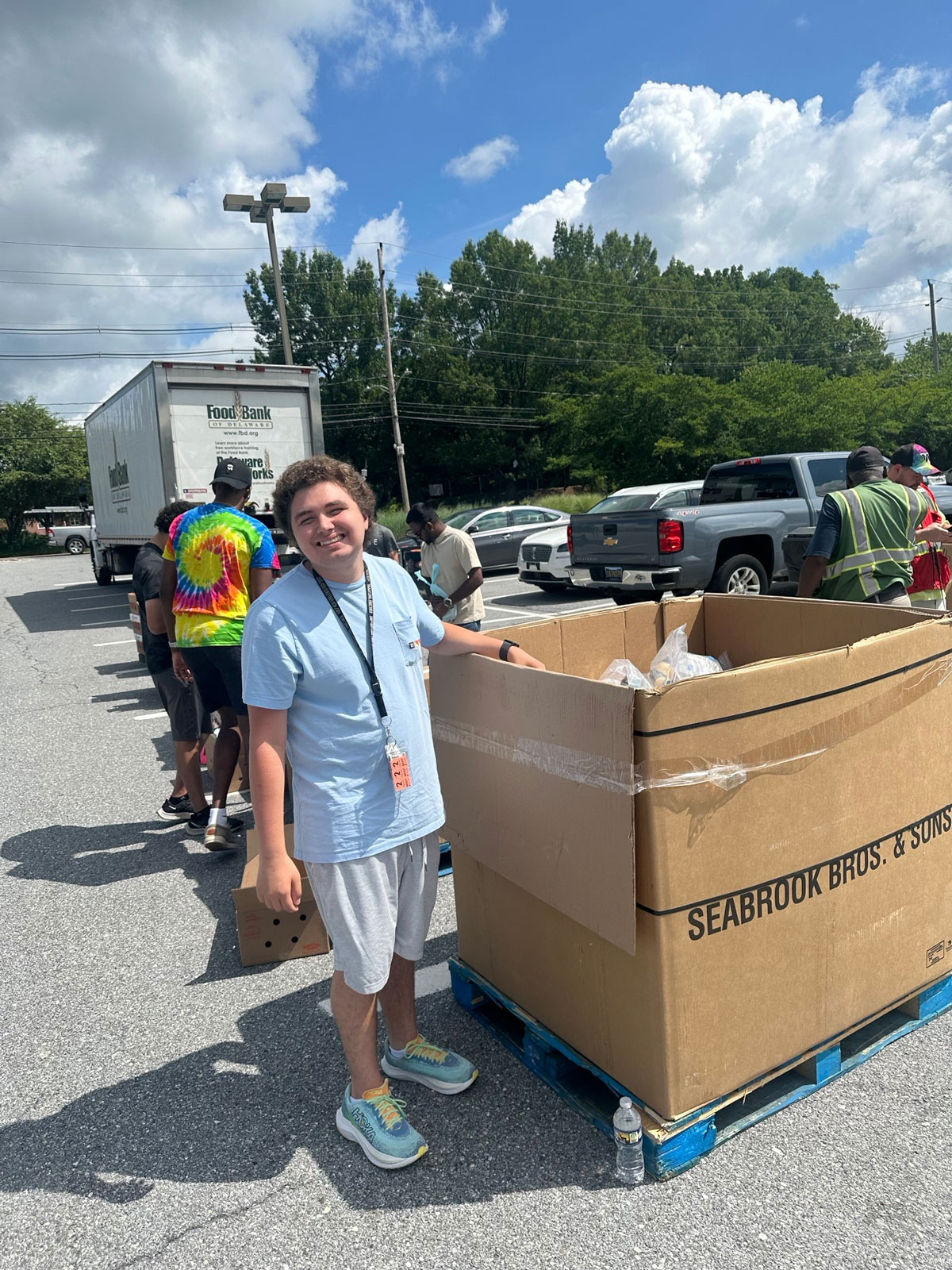
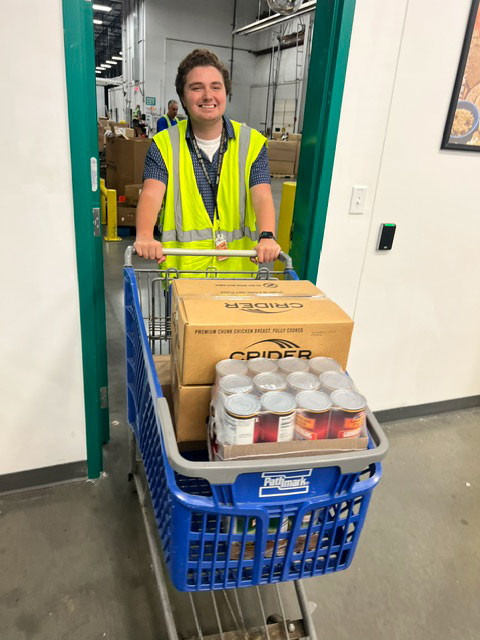
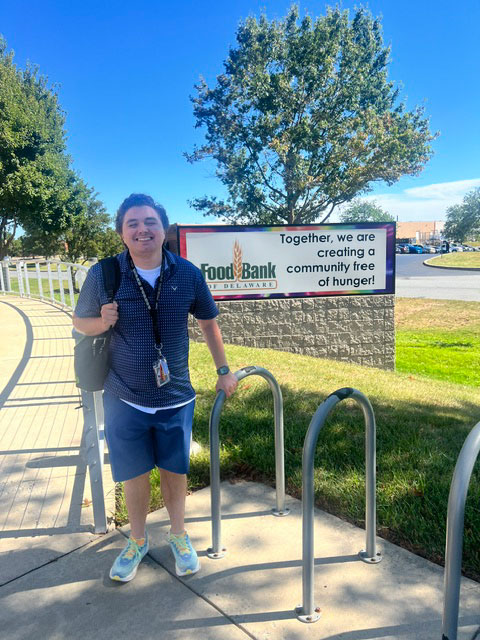
Mateo’s work at the food bank reflects that sense of belonging. While he is learning and growing, Makila said, he is also giving back and becoming “a very important piece” of his community. He is not simply practicing skills in preparation for life in the community. He is already living it.
That is the heart of Meaningful Day: helping people move beyond the structure of school and into adult lives shaped by purpose, choice, and meaningful connection.
For Toni, that support has meant more than peace of mind. It has helped Mateo arrive prepared and feel supported as he takes part in days that are becoming his own.
“He loves it,” Toni said. “He asked me yesterday if he could go to Meaningful Day forever.”
It is a small answer that says a lot. Mateo has found a place he enjoys, people he looks forward to seeing, and a rhythm that helps him keep growing beyond high school.
One meaningful day at a time, he is building a life that feels more connected, more confident, and more fully his own.
Interested in learning more?
Learn more about KenCrest’s Meaningful Day program and how it helps adults build lives that reflect their goals.
Read More Stories From KenCrest









Let's Keep in Touch
Join the KenCrest team and stay updated on the latest news in the disability community, inspiring stories, and ways you can help us make a difference in the lives of people with an intellectual or developmental disability.