
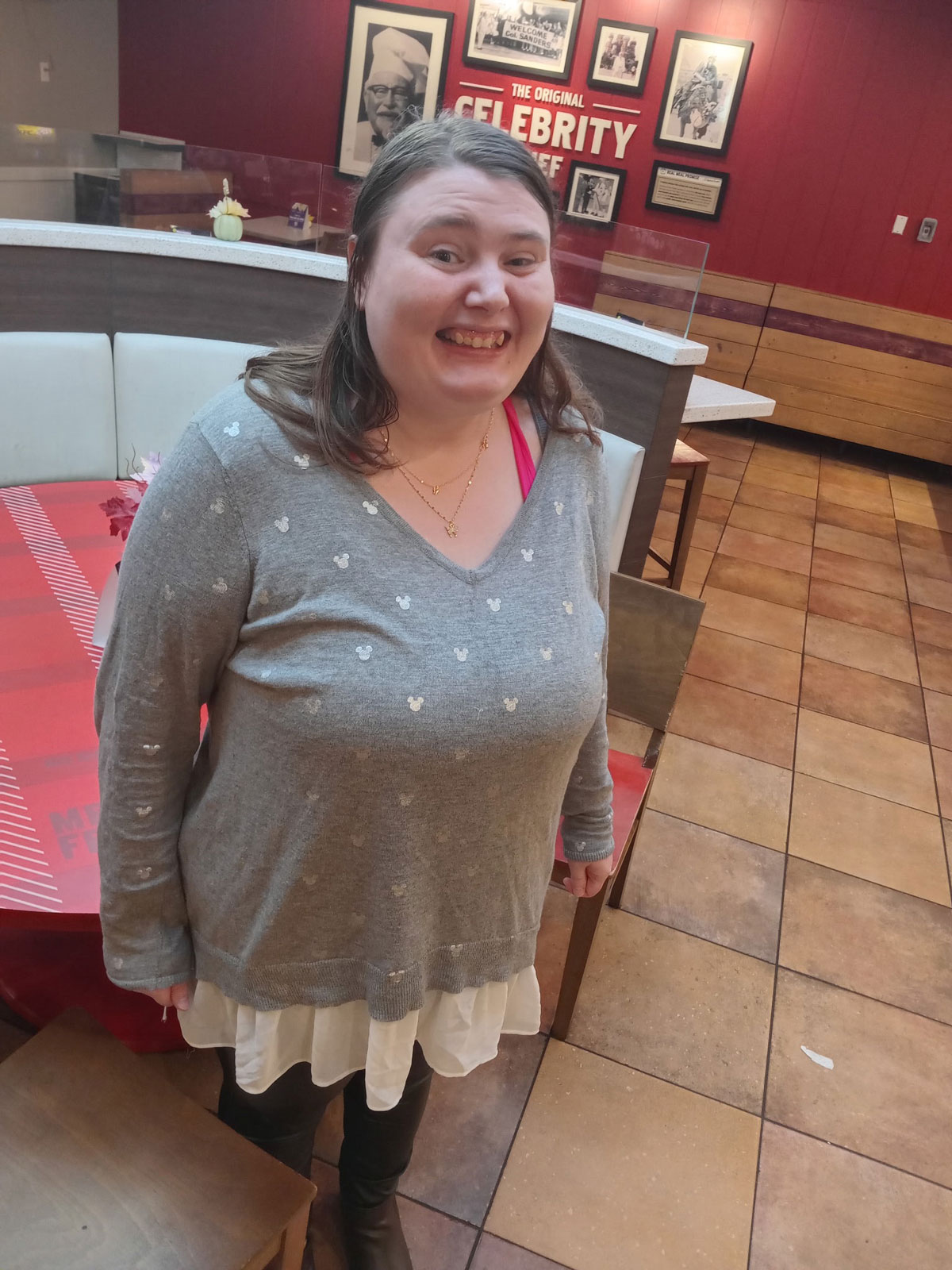
For much of her life, Deanna had been told, in quiet and not-so-quiet ways, that her voice did not always matter. She had learned that speaking up did not always mean being heard. Sometimes, it meant being dismissed. Sometimes, it meant having her feelings overlooked. After time in a psychiatric setting, she moved into a community living home, but it was not the right fit for her. She was unsure whether speaking up would make a difference there either.
So she protected herself in the only way she knew how. She stayed quiet. For a while, silence felt safer than the risk of being disappointed again.
“I was always afraid to speak up,” she said. “Because every time I did in the past, people would just shut me down.”
That fear did not disappear all at once. But slowly, with the right support and the growing belief that her choices deserved to be respected, Deanna began to trust her voice again. She finally spoke up about the living situation she was in, and that changed everything.
“I was like, ‘I gotta get out of here,’” she said.
It became the start of something new.
After speaking up, Deanna moved into KenCrest’s Supported Independent Living program, a residential option for adults with intellectual and developmental disabilities who want to live more independently with personalized support. The program helps people build daily living skills, make more of their own decisions, and create a life at home that feels right for them.
For Deanna, that meant more than a new place to live. It meant greater stability, more autonomy, and the chance to begin shaping her future on her own terms.
But the biggest change is not just where she lives.
Today, Deanna talks openly about her plans for the future. She is engaged, preparing to move in with her fiancé, and making decisions about what comes next. The woman who once avoided speaking up now approaches those decisions with greater confidence and a clearer sense of what she wants for her life.
The Power of Everyday Choice
Self-advocacy can grow through the ordinary moments that shape a person's life: choosing what to eat, deciding who to spend time with, asking for privacy, or saying, This is what I want.
Kelly Sesay, Assistant Vice President of Quality at KenCrest, has known Deanna for nearly two decades and has watched her journey from a highly restrictive setting to a life with far more independence, choice, and stability.
For Kelly, Deanna's story is a powerful reminder that self-advocacy is not about doing everything alone. It is about having a real voice in your own life and having that voice respected.
For Deanna, healing began when someone finally made space to listen. She was given room to speak, to be honest about what was not working, and to imagine something different for herself. Little by little, that space helped her trust her own voice again.
“It doesn't have to be some major self-advocacy,” Kelly said. “It could be somebody who maybe just wants their room painted hot pink.”
As Deanna continued to build her own confidence in speaking up, she also found opportunities to learn from other self-advocates. On February 18, 2026, she attended a self-advocacy conference hosted by KenCrest, where she listened as people shared their experiences with leadership, civic engagement, relationships, and advocating for their rights.
As the conversation deepened, some people moved their chairs forward, choosing to participate more fully in a discussion that resonated with them.
Throughout the day, conversations centered on rights, relationships, leadership, civic engagement, and the power of lived experience.
During the event, Deanna did something she once never would have imagined: she stood up and spoke for herself in public.
“I have never done anything like that before,” she said, laughing as she remembered it. “Honestly, I was so nervous.”
But she spoke anyway.
She shared how she met Kelly, how much her life had changed, and what it meant to find her voice after years of feeling unheard.
For Kelly, stories like Deanna's show why people with lived experience should be seen not only as participants in services, but as teachers, leaders, and voices worth following.
“I don't think we bring them to the forefront enough,” Kelly said. “We can learn from them much more.”
Through advocacy programs, conferences, and opportunities for self-advocates to share their perspectives, KenCrest continues to create spaces where people can learn from one another and shape conversations about the issues that affect their lives.
When Deanna thinks about others who may still be unsure or finding their way, she keeps her advice simple:
“Speak to somebody they know and discuss it with them ... and then take it slow.”
Today, Deanna is engaged, preparing to move in with her fiancé, and looking ahead to what's next.
Interested in learning more?
Learn more about how KenCrest supports self-advocacy and empowers people to use their voices.
Read More Stories From KenCrest








Let's Keep in Touch
Join the KenCrest team and stay updated on the latest news in the disability community, inspiring stories, and ways you can help us make a difference in the lives of people with an intellectual or developmental disability.