
When Alex “Al” Rossius talks about where she is today, she often starts with where she wanted to go. After sustaining a C‑4 spinal cord injury in July 2023, Al knew one thing for certain: she wanted to return to college. At just 19 years old, she was ready to move forward, but she also knew she would need new tools and new ways of doing things to get there.
“One of my goals was to start up with college again after my injury,” Al shared. “I was trying to find a way to get the equipment I needed to have all the tools I needed to participate fully.”
Through the Office of Vocational Rehabilitation (OVR), Al was introduced to KenCrest’s Enabling Technology program, where she began exploring assistive technology to support her goals, her independence, and her everyday life. What started as a search for equipment quickly became something much bigger, a process of discovery, problem‑solving, and renewed confidence.
Now a freshman at Montgomery County Community College, Al uses a range of assistive technologies that allow her to engage in coursework, connect with her computer, and explore her interests both inside and outside the classroom. Depending on what she’s doing, she adapts, just as the technology adapts to her.
“I use a variety of different technologies, depending on the situation, where I’m at, and what I need to do,” she explained.
With the support of KenCrest’s Enabling Technology program, Alex was able to try different devices, test what worked best for her body, and adjust as needed. Some of the tools she uses today include a HeadMouse Nano to control her computer cursor and a GlassHouse Pro headset that connects via Bluetooth to her devices. She also uses adaptive gaming tools, allowing her to participate in leisure activities she enjoys.
Learning to use these devices wasn’t instant, and Alex is honest about that. “There was some trial and error, for sure,” Al said. “Sometimes there was a lot of fatigue, and sometimes it felt like it gave me a lot of freedom. I really had to try it out before I fully committed.”
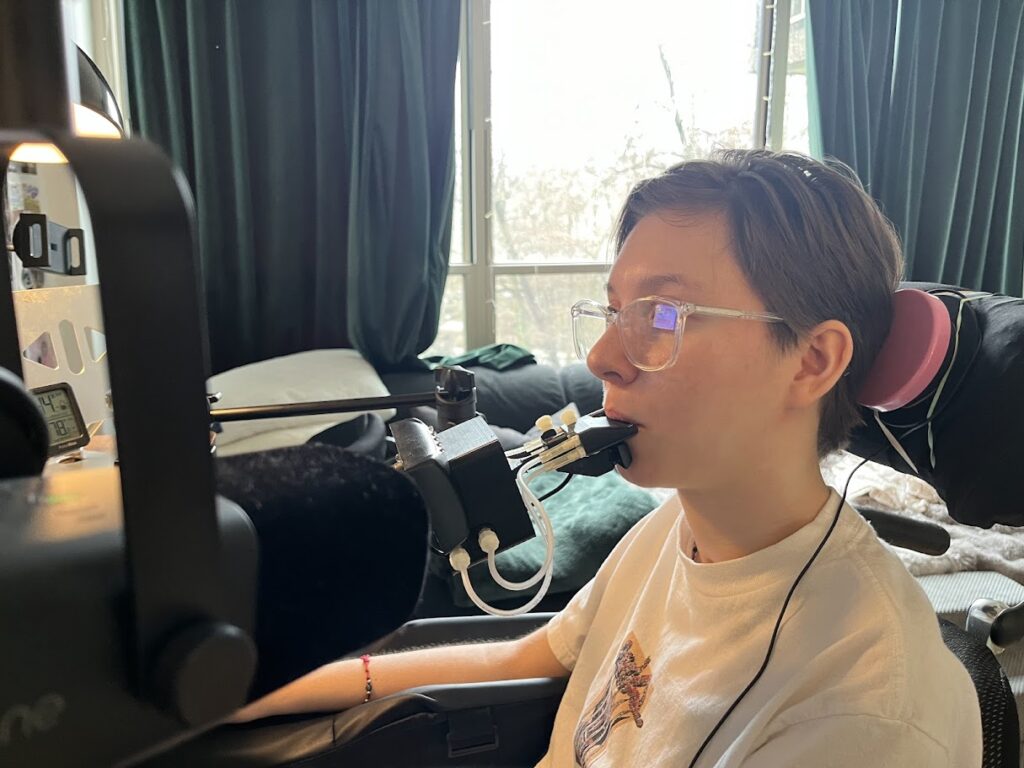
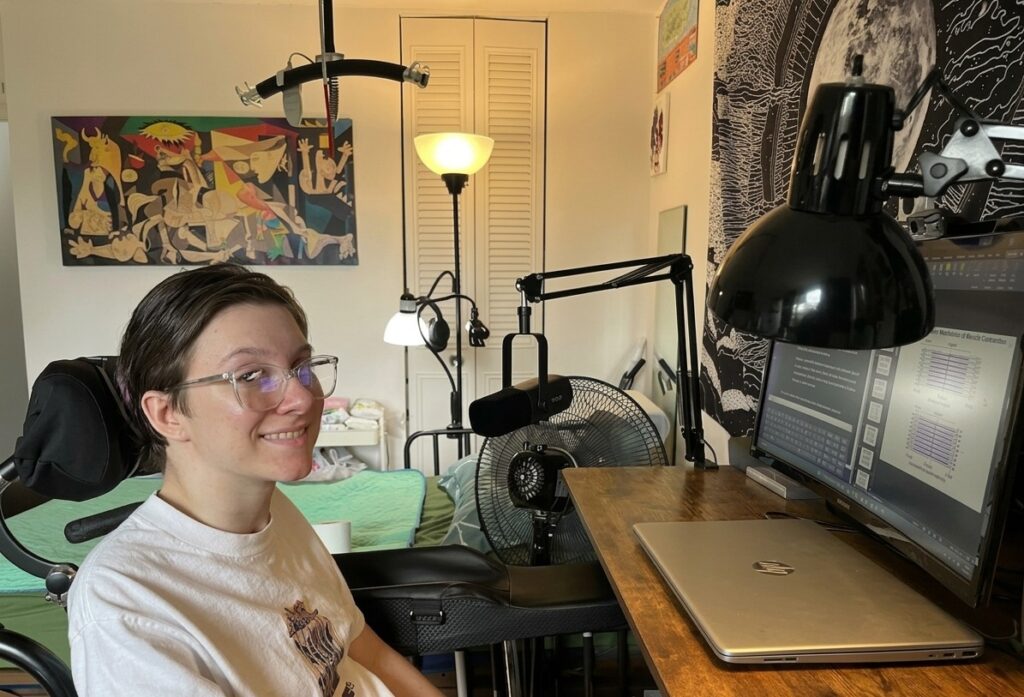
That flexibility and the ability to test, adjust, and direct questions to Karen Latimer, the Director of Enabling Technology at KenCrest, made all the difference. Rather than being handed a single solution, Al was supported through a process that centered on her needs, comfort, and long‑term goals. Over time, assistive technology became less about learning a device and more about reclaiming independence.
“It was incredibly empowering,” she shared. “Especially after spinal cord injury, it’s very easy to get stuck in comparing your past capabilities. Assistive technology has allowed me to really dive into my coursework and be able to create.”
Through technology, Al found new ways to engage with her studies, from programming and coding to design and experimentation. That engagement has helped her reconnect with her academic path and imagine what her future could look like.
“It’s honestly been life‑changing,” Al said. “Because it gives me so much autonomy.”
That sense of autonomy has sparked a growing interest in biomedical engineering, where Al hopes to one day help others through research, medical technology, or even assistive technology itself.
But for Al, the impact of KenCrest’s Enabling Technology program goes beyond devices alone. Having knowledgeable support, someone who understands the landscape of assistive technology and can walk alongside her through the process, made the journey feel manageable instead of overwhelming.
Being able to borrow devices, weigh the pros and cons, and troubleshoot challenges gave Al the confidence to advocate for herself and continue exploring what’s possible.
“It just makes it feel a lot better, knowing that you’re not alone on this journey,” she said.
Today, Al continues to expand how she uses assistive technology, not only for school, but for creativity, gaming, and everyday life. She approaches it with curiosity and openness, knowing that progress doesn’t always look perfect.
“Having a willingness to explore and be flexible, and be okay with trial and error, you never know what you can find,” she shared.
Al’s story is a powerful reflection of what happens when the right tools meet the right support. Through KenCrest’s Enabling Technology program, assistive technology has helped her regain independence, build new skills, and move confidently toward her future, one choice, one device, and one possibility at a time.
Al's journey shows what’s possible when the right technology meets the right support. If you or someone you care about could benefit from assistive or enabling technology, KenCrest’s Enabling Technology program is here to help individuals explore tools, build skills, and gain greater independence. Learn more about how KenCrest can support your goals and help open new possibilities.
Read More Stories From KenCrest



Let's Keep in Touch
Join the KenCrest team and stay updated on the latest news in the disability community, inspiring stories, and ways you can help us make a difference in the lives of people with an intellectual or developmental disability.