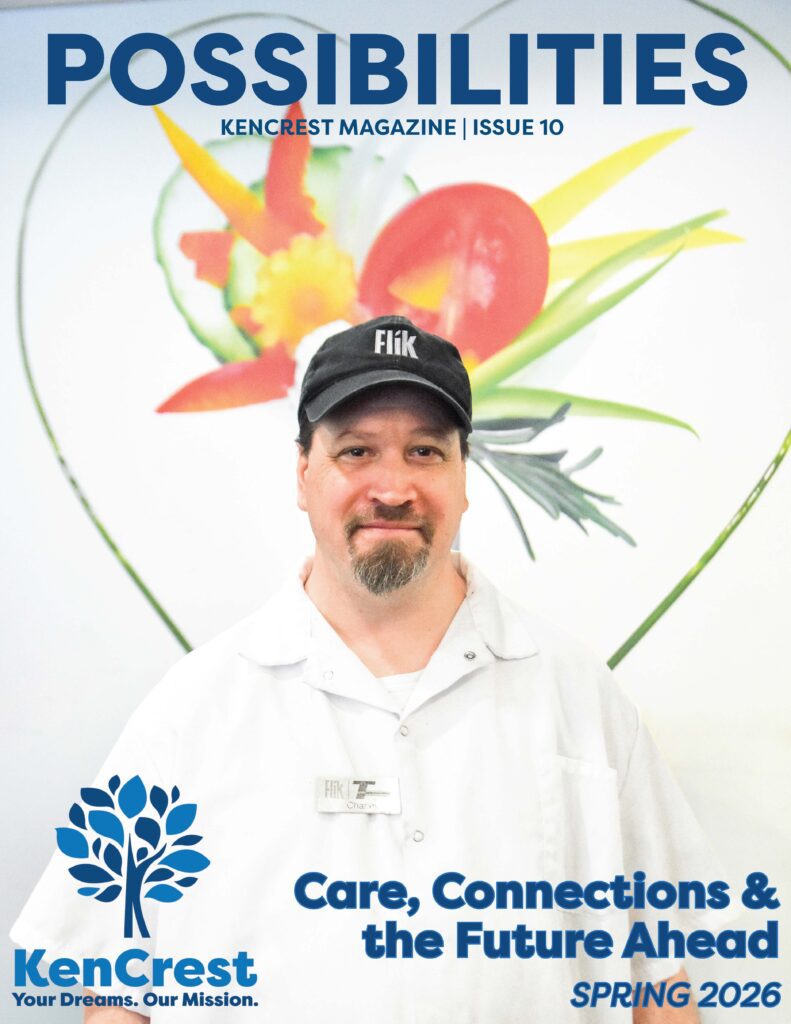
POSSIBILITIES
KENCREST MAGAZINE | Spring 2026 | Issue 10
Care, Connections & the Future Ahead
IN THIS ISSUE
Our latest issue of Possibilities is here! Explore stories celebrating the people, innovation, and unwavering commitment that turn care into community.
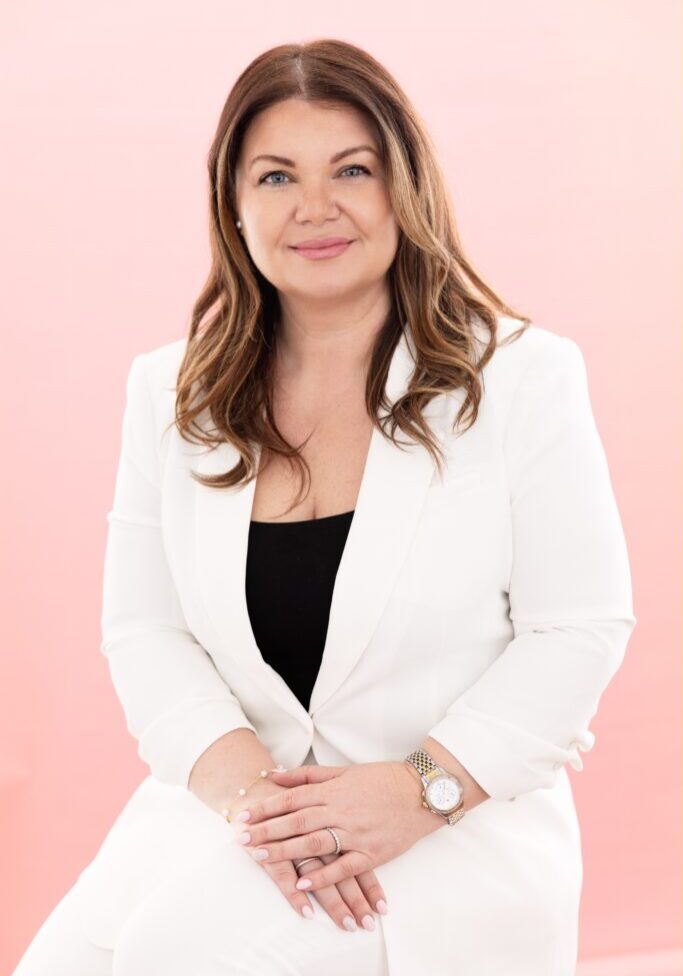
Meet The New CEO Leading KenCrest Forward
Aurora Kripa shares her leadership philosophy, personal passions, and plans for KenCrest as she steps into her role as the organization’s new CEO.
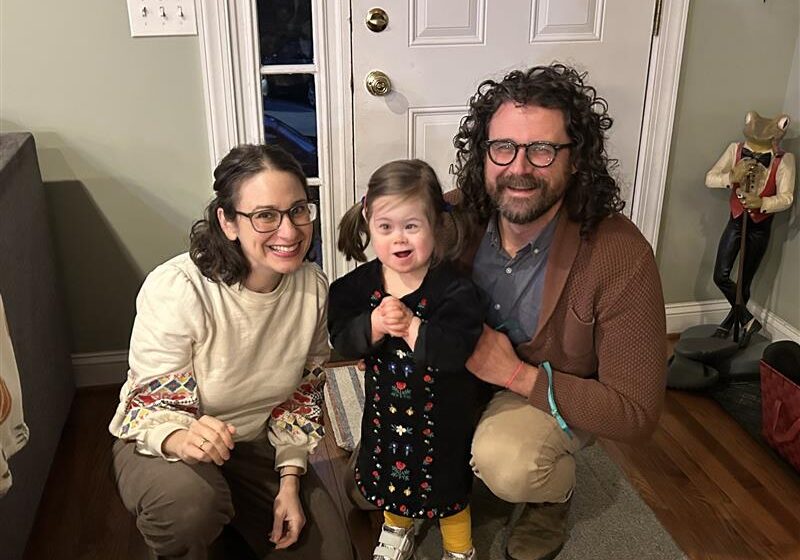
Where Care Becomes Family Through KenCrest’s Lifesharing Program
KenCrest’s Lifesharing program helps people with intellectual and developmental disabilities build family connections, independence, and a sense of belonging through life-changing support.
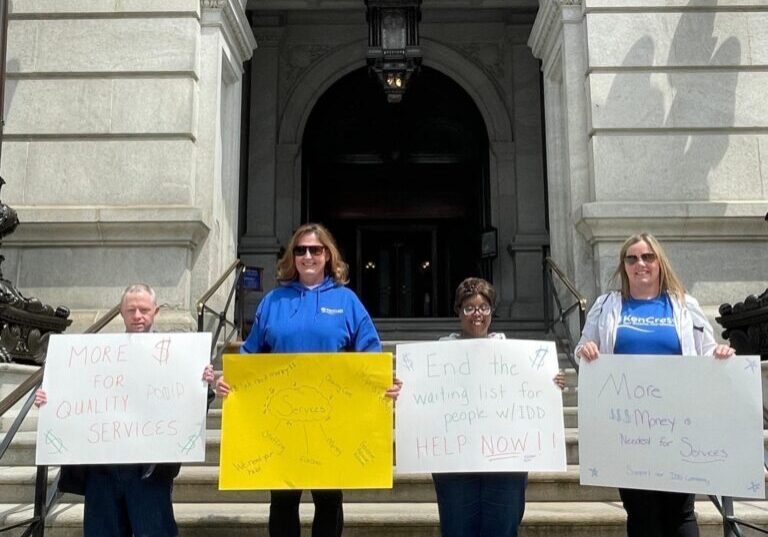
Recognizing the Direct Support Workforce
Direct Support Professionals play a vital role in the lives of people with I/DD. Learn why recognizing DSPs as a distinct workforce matters.
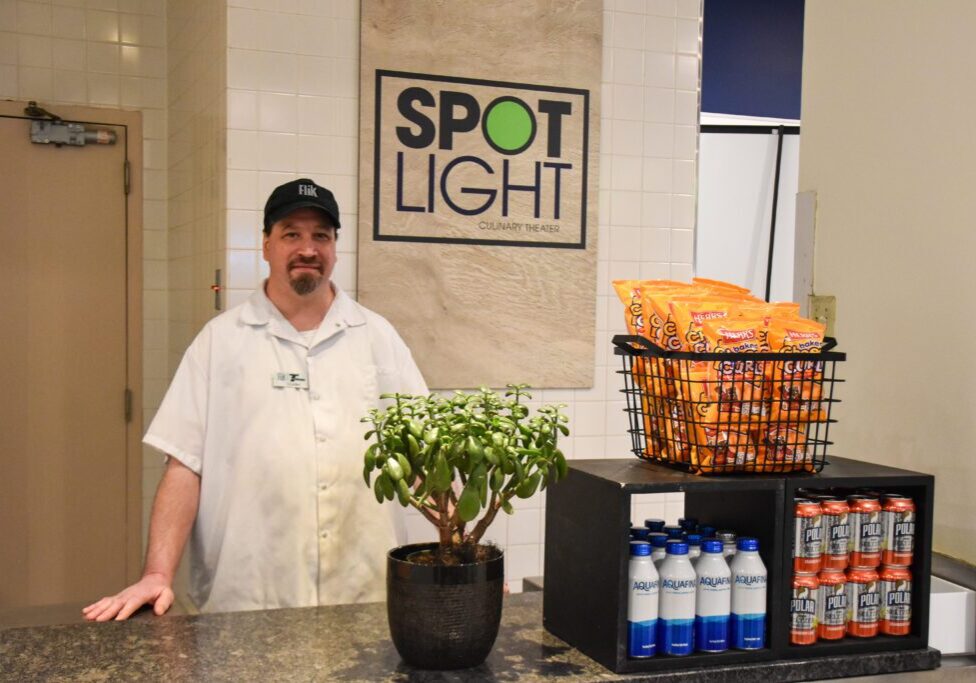
30 Years of Dedication, Community, and Eagles Fandom at Flik
Learn how KenCrest helps individuals with intellectual and developmental disabilities thrive through employment and community support.

Smart Tech, Safer Living:
Discover how KenCrest’s enabling technology program empowers older adults to live safely and independently using smart devices, voice assistants, and personalized support.
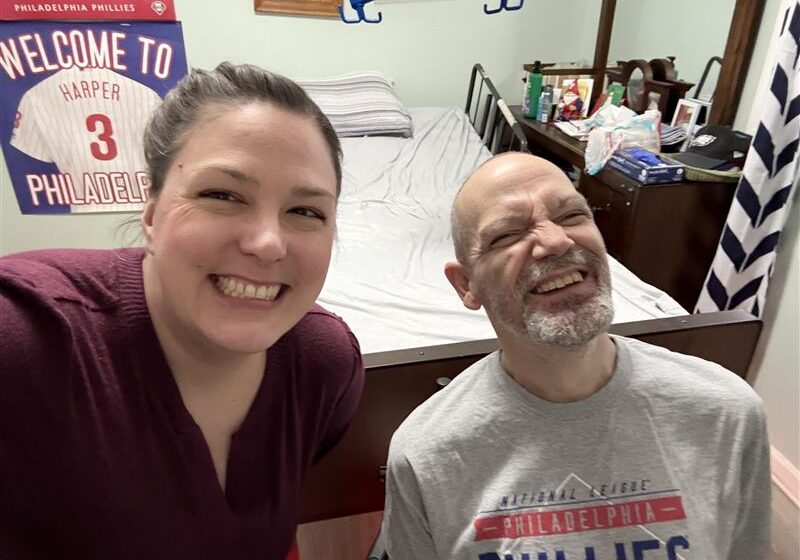
Building Bridges with Deacon Ali Clark
Deacon Ali Clark builds bridges between faith communities and the people KenCrest serves, turning compassion into action through inclusion and connection.
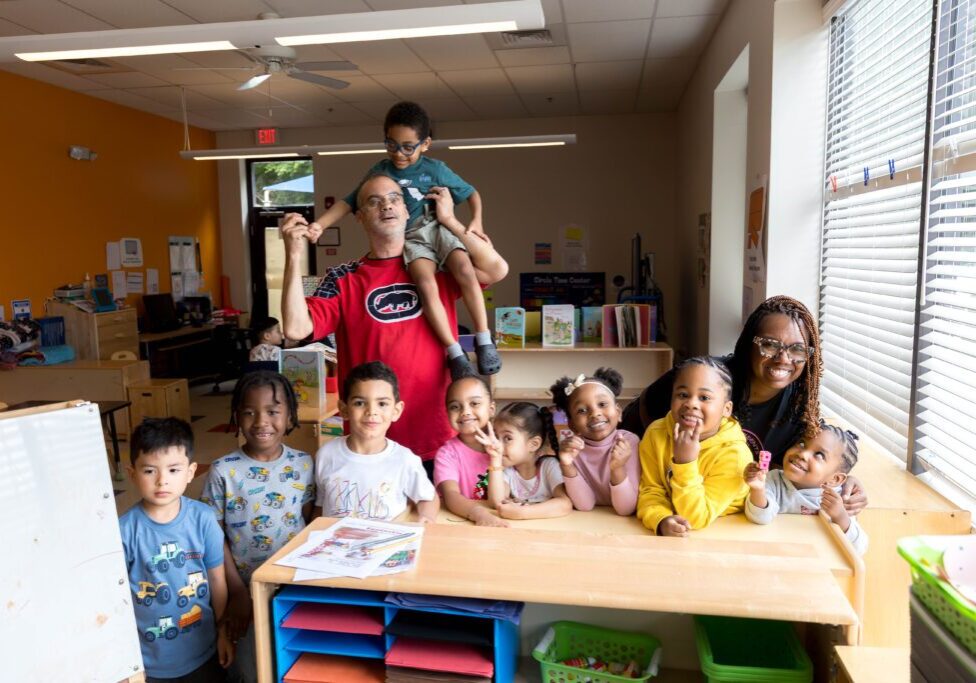
A Safety Net for Every Child
How the William Penn Foundation Grant is transforming KenCrest’s SWIFT Support’s reach, helping every child remain in preschool.
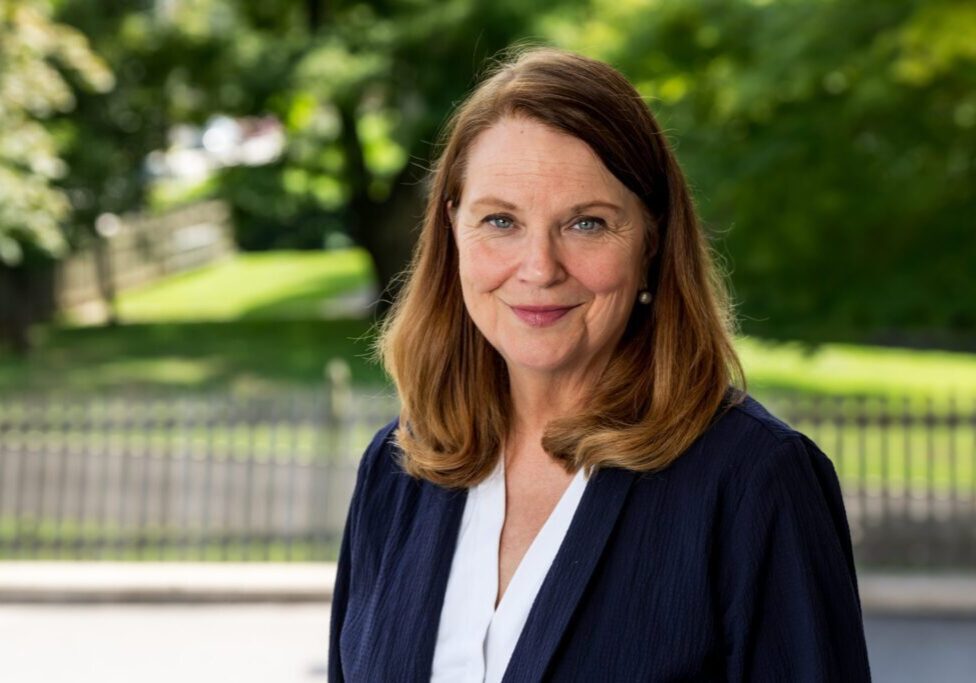
Meet Wendy Parsons, the Chief Philanthropy Officer at KenCrest
Learn about Wendy Parsons' vision for philanthropy at KenCrest, focusing on connections that foster opportunity and change.
Letter From The Editor
Stepping into this role as Chief Executive Officer at KenCrest, I am filled with gratitude and excitement. Thank you for the trust you place in us and for being such an essential part of our community. It is truly an honor to serve alongside your loved ones and to partner with you in supporting their goals, growth, and well-being.
Growing up in a close-knit community and across cultures shaped my belief that inclusion, respect, and open communication are the foundation of meaningful partnerships. These values guide me as we build on KenCrest’s 120 year legacy and look toward a future centered on opportunity, dignity, and belonging for every person we support. I always want you to feel heard and welcomed, so please don’t hesitate to reach out, share your thoughts, or connect with us anytime as we move forward together.
This spring issue celebrates what is possible when individuals and families are empowered. You’ll read about an inspiring 30-year working anniversary at Flik, a powerful reminder of what’s possible when people are supported in meaningful employment. You’ll also learn about a William Penn Foundation grant, which allows us to expand our SWIFT support services to new communities. This investment strengthens our ability to respond thoughtfully and compassionately to the evolving needs of the individuals and families we serve.
We are excited to introduce one of the newest members of our Enabling Technology 65+ community, reflecting on our ongoing commitment to innovation, independence, and connection as people age. Our Lifesharing program continues to grow as well, offering medically- fragile, biological, and traditional options, each designed to provide safe, supportive, and nurturing environments tailored to individual needs.
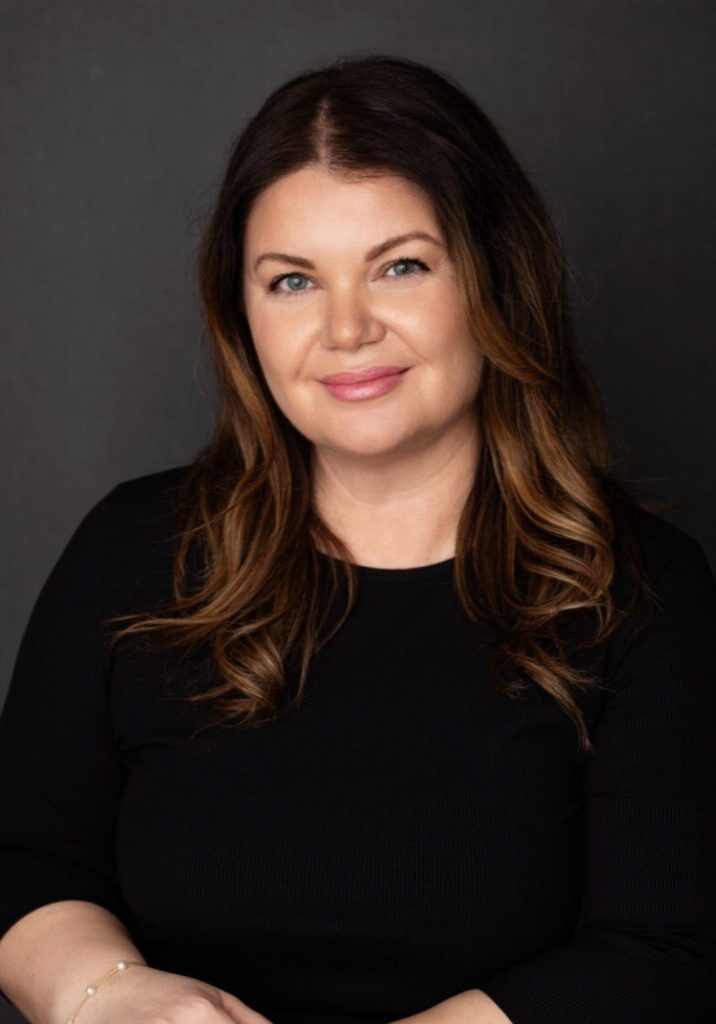
Our focus continues to be on delivering the highest-quality services for every individual and family we help. Along the way, we are pushing the boundaries of efficient and responsive person-centered programs. When our foundation is strong and aligned, we can innovate, collaborate, and grow in ways that directly benefit every member of the KenCrest family. Your feedback and partnership are invaluable as we continue to evolve together.
You will also read about the establishment of our faith engagement initiatives. KenCrest was founded in 1905 by Lutheran leaders and their efforts to create new solutions for those in need still guide us as we focus on nurturing the longstanding relationships with Lutheran churches that have supported KenCrest since our founding, while continuing to build partnerships with other faith communities that share our commitment to compassion, service, and inclusion.
Thank you for being part of KenCrest’s story. I am deeply honored to serve as CEO and look forward to all we will accomplish together. With integrity, purpose, and heart, we will continue working to make a difference in 2026 and beyond.
Aurora Kripa
President and Chief Executive Officer

Imagine if care meant family meals, laughter over inside jokes, and vacations together, where support feels less like a service and more like a genuine connection. That’s the heart of what KenCrest’s Lifesharing program aims for: a compassionate approach that replaces clinical settings with real belonging, turning routines into relationships and transforming lives through community.
Instead of living in traditional facilities, Lifesharing invites individuals with intellectual or developmental disabilities to become part of families who open their homes and hearts, sharing everyday moments and milestones. KenCrest offers a range of Lifesharing models all provided in a family members home, including traditional, biological, and medically complex, but they all share one powerful belief: everyone deserves a life filled with meaning, surrounded by people who truly care.
For two families, embracing this belief led them to lifesharing, an experience that brought new opportunities and perspectives.
Amanda, John & Fern: Medically Complex Lifesharing Built on Love and Possibility
When Fern entered the world in 2020, Amanda and John braced themselves for a new journey, determined to face life’s challenges together as they learned what it meant to raise a child with Down syndrome. But nothing could have prepared them for the journey that followed; months spent in the NICU, nearly a year in the hospital, and a relentless stream of specialist visits as Fern battled complex endocrine complications. Survival became their daily mission, as milestones, vacations, and even simple moments of rest felt heartbreakingly out of reach.

"We had no idea what Fern’s future would hold," shared Amanda, her voice reflecting both uncertainty and unwavering love. " We were just trying to get through each day. "
With the support around her, Fern blossomed into a vibrant five-year-old, attending preschool, expressing herself through American Sign Language (ASL) and an Augmentative and Alternative Communication (AAC) device, and discovering her world through play, therapies, and new friendships. Yet, the Jacobs family continued to grapple with overwhelming medical needs and the strain of finding sustainable support.
In January of 2025, when Fern was five-years-old, Amanda was introduced to KenCrest’s medically complex Lifesharing model through a CareLync specialist after Fern recieved waiver funding. Suddenly, Amanda and John were no longer isolated in their struggle; they found real, meaningful help. "It was such a relief to finally feel supported," Amanda explained. "This program is so validating; it shows people like us that we’re not alone, and it offers hope to families who don’t have that support system."
Lifesharing opened doors the Jacobs family never thought possible. Fern gained access to critical resources, financial flexibility for therapies and activities like swim classes, and ongoing guidance tailored to her unique needs. "It truly changed our lives," Amanda said, emotion shining through. "It doesn’t just help Fern, it helps our entire family grow and thrive."
With this support, Fern’s world expanded. She took her first independent steps at two and a half, a milestone that filled Amanda with pride and gratitude. Once hesitant to explore, Fern now delights in building blocks, painting, racing cars, and playing with trains. Though she remains non-verbal, technology and therapy have empowered her to connect with those around her.
For Amanda, added support meant reimagining what family life could include. It created space for experiences they once hesitated to plan, like a trip to the beach for the first time. “When Fern was three, we took her to the beach for the first time,” Amanda shares. “I think that was a really important memory that kind of imprinted on both me and John’s hearts.”
Alongside medical needs and daily routines, Fern’s joy and curiosity continue to shine through. With the right supports around her, her days now hold more opportunities for connection, exploration, and simply being a kid, moments that allow her to experience more of the world on her own terms.
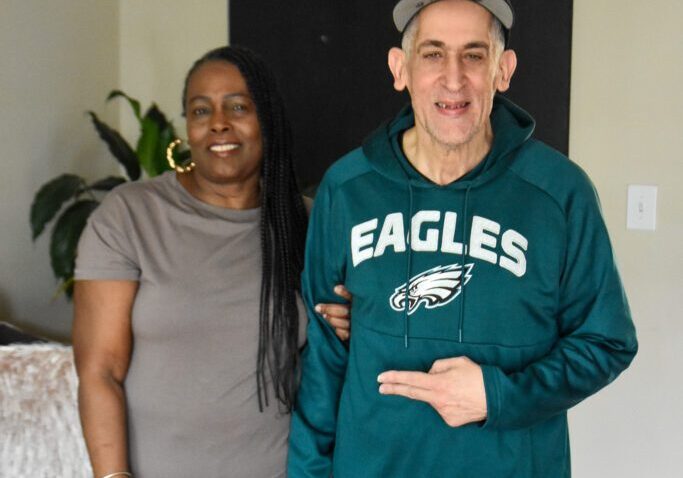
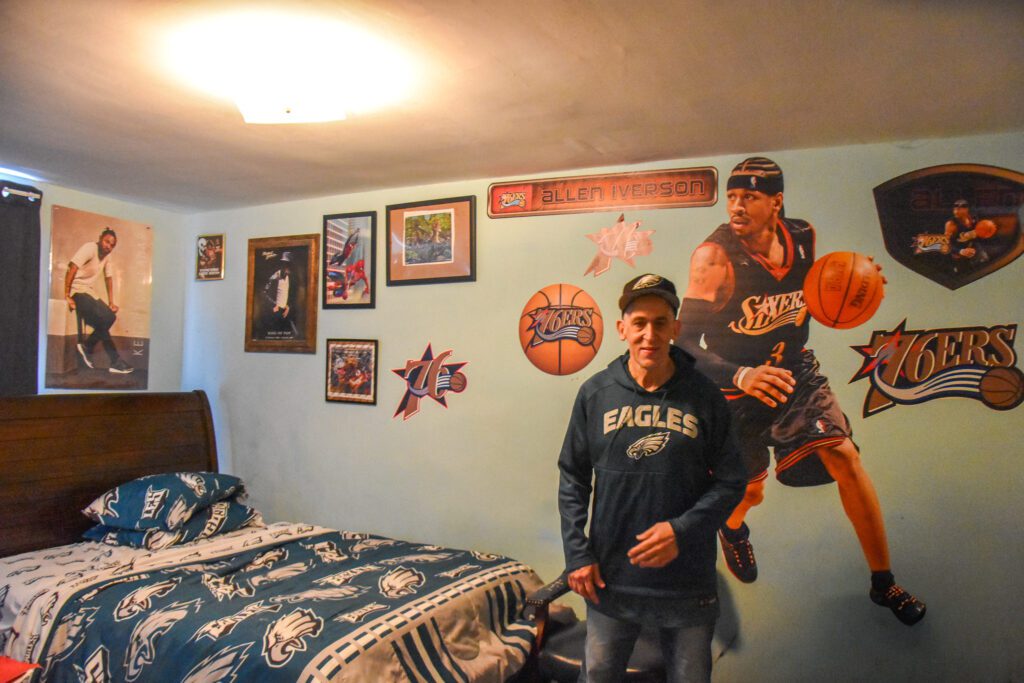
Carol & Arturo: A Lifesharing Bond Strengthened by Joy, Independence, and Family
Just as Amanda and John found hope and belonging through Lifesharing for Fern, another story unfolded, one rooted in the power of companionship and family connection. Carol and Arturo’s story highlights the power of genuine relationships and the role Lifesharing has played in their journey. Their journey began with a spark. Carol, visiting a KenCrest community living home for the first time, was greeted by Arturo’s warm smile and infectious joy. The connection was instant, but over time, it became clear that Arturo wanted more than friendly visits and shared outings. When Carol began bringing him along to family gatherings and holidays, she noticed how deeply he was attached to those moments of togetherness.
“He had no family and nowhere to go,” she recalled, explaining why she started including him in celebrations like Thanksgiving and Christmas with her own relatives.
As their relationship grew, Arturo’s bond with Carol only deepened, and her absence was something he felt keenly. When KenCrest later asked Carol if she would welcome Arturo into her home, not as a guest, but as family, her response came without hesitation. “Yes,” she said, “and that was the beginning of it, and we’ve been together ever since.”
With KenCrest’s Lifesharing program, Arturo didn’t just join Carol’s household, he became an inseparable part of her life and heart. He traveled with the family, celebrated milestones, and experienced the freedom to live on his own terms. Weekly community days with Carol’s son Maurice gave him purpose and connection; bowling, shooting pool, movies, and his love for Michael Jackson filled his days with excitement and joy. The once fleeting visits transformed into the everyday magic of true belonging.
“People with special needs want the same quality of life as anyone else, and they should have it,” she reflects. “Arturo chooses how he spends his days, where he goes, and how he lives his life, but I chose to take care of him. He’s become my family.”
One moment shines brighter than the rest: Carol’s 50th birthday, celebrated with family and friends, where Arturo danced with pure joy, lighting up the room. “He brought joy into my life. And I know I brought joy into his.”
Through Lifesharing, Carol and Arturo discovered not only companionship and stability but a profound sense of family, a bond that would never be temporary again.
Where Every Story Begins With ‘Yes’
Fern’s journey is a testament to what’s possible when families receive the right support, while Arturo’s story highlights the joy that springs from deep and meaningful relationships. Though their experiences are shaped by different needs—medical complexity for Fern, lifelong companionship for Arturo—both families show us what Lifesharing truly means. It’s not just about providing care; it’s about opening the door to choice, freedom, and genuine belonging.
In homes touched by Lifesharing, people don’t simply receive services; they gain the opportunity to celebrate milestones, forge independence, and find their place in a family. “Lifesharing gives people like Fern more opportunities to be in the community and to thrive,” Amanda shares, reflecting on the transformation in her own family.
Carol echoes this sentiment, emphasizing a core truth she believes should guide every interaction: “They are human. They have feelings.” Her words reflect the importance of seeing each individual first and foremost as a person.
Lifesharing isn’t just a program, it’s an open invitation to build real connections and make a lasting difference, for the people who join your home and for yourself.

Thursday, April 30, 2026
An Evening Celebrating KenCrest and the Power of Possiblities
Join us for an inspiring evening celebrating the dreams that
take shape every day at KenCrest. Enjoy dinner and drinks,
remarks from KenCrest’s new leadership, and a special
program featuring members of the KenCrest family.
Thursday, April 30 | 6:00-8:30 PM
Whitemarsh Valley Country Club
815 Thomas Road, Lafayette Hill, Pennsylvania
Empowering Dreams is a celebration of KenCrest’s mission being
brought to life. This inspiring evening brings together friends and
supporters to share life-changing impact, inspiring stories, and
the possibilities made real through generosity.
Your support helps dreams come true throughout the communities
KenCrest serves: dreams of inclusion, dignity, and independence.
Our 120 year history of excellence and innovation serves as
motivation to continue exploring possibilities for the children,
adults, and families who look to us.
Hanifa always treasured her home, its quiet corners, familiar sounds, and memories tucked into every room. But as her vision dimmed and walking from one spot to another grew harder, the comfort she’d always felt began to slip away. Simple things, like finding her cell phone or answering the door, turned into anxious moments. Some nights, worry crept in: If she needed help, would she be able to reach anyone?
“Sometimes I just can’t see where the phone is,” Hanifa confessed, recalling with a smile the times she’d search for it by touch. But beneath her laughter lingered real uncertainty: If she slipped, if she fell, how would she call for help?
Hanifa’s son noticed the subtle shifts in her confidence. Wanting his mom to feel safe at home again, he found KenCrest’s Enabling Technology program and reached out, hoping for a brighter solution. That simple act, a phone call, sparked a transformation.
Karen Latimer, KenCrest’s Director of Enabling Technology, arrived at Hanifa’s door not with tests or technical jargon, but with warmth and understanding. She sat beside Hanifa, listened to her stories, and gently asked what would make her feel secure. “She came and explained to me what it is about… and I was pretty interested. It wasn’t difficult,” Hanifa recalls. Karen understood Hanifa’s world: the blurry edges, the slow steps. Together, they found technology that could ease her path.
The updates were surprisingly simple, yet their impact rippled through Hanifa’s daily life. A voice assistant, Alexa, sometimes Ziggy, became her companion. With just a word, Hanifa could check the time, hear the latest forecast, play favorite songs, and, most importantly, call for help. The “buddy system” meant Hanifa could reach her son or daughter instantly, her voice bridging any distance. “If anything should happen, I can always ask them to call my buddy… if I am in any trouble, any distress.”

Technology even brought small triumphs, like the day her granddaughter arrived, and Hanifa wasn’t home. Instead of panic, Hanifa used her smart-lock to unlock the door remotely, feeling proud and empowered. “I was able to let her in, just like that,” she says, beaming.
At first, Hanifa hesitated. All the gadgets seemed daunting, another challenge to overcome. But Karen’s patient guidance made each step feel possible. “She was always there, helping me learn. Anything I didn’t understand, she explained,” Hanifa remembers. Now, she’s not just comfortable, but eager to keep exploring. “There’s always something new to discover,” she says.
Inspired by her own progress, Hanifa gently nudges others to try the program. She knows some feel unsure; can they really master new technology? But Hanifa hopes her story will show them the answer is yes, and that it’s worth the leap.
For Hanifa, KenCrest’s Enabling Technology didn’t just bring devices and apps. It brought back her sense of safety, her independence, her hope. “Karen was wonderful, too,” Hanifa adds, grateful for the human touch behind every tool.
These days, Hanifa knows help is just a word away, whether she’s seeking advice, learning a new recipe, or making a grocery list. She’s discovered that technology isn’t something to fear; it’s something that adapts to her needs and opens doors to life. KenCrest gave Hanifa more than gadgets. They gave her confidence and the freedom to shape each day her own way.
Help Us Explore Possibilities, Mobilize Resources, and Empower Dreams
Building Bridges With Deacon Ali Clark
When Deacon Ali Clark visits a church, she usually arrives with two things: stories and invitations. Stories about the people KenCrest serves, and invitations for congregations to become part of those stories.
Ali was ordained as a deacon in the Evangelical Lutheran Church in America (ELCA) in December 2025 and accepted her call from the Southeastern Pennsylvania Synod and was installed as KenCrest’s Faith Engagement and Outreach Coordinator in January 2026. In this role, she connects ELCA churches and other faith communities with the individuals KenCrest supports, helping create relationships rooted in care, inclusion, and shared purpose.
Her connection to KenCrest began with its history. Ali was inspired by the legacy of Sister Maria Roeck, a Philadelphia deaconess who partnered with Pastor August Fisher of St. Michael’s Lutheran Church in Kensington to help launch what would become KenCrest. Other deaconesses, including Sister Grace Jones, later shaped the organization’s mission to focus on early education and support for people with intellectual and developmental disabilities. Although the ELCA now uses the term “deacon,” Ali feels a strong kinship with these women whose faith and leadership laid the foundation for KenCrest’s work today.
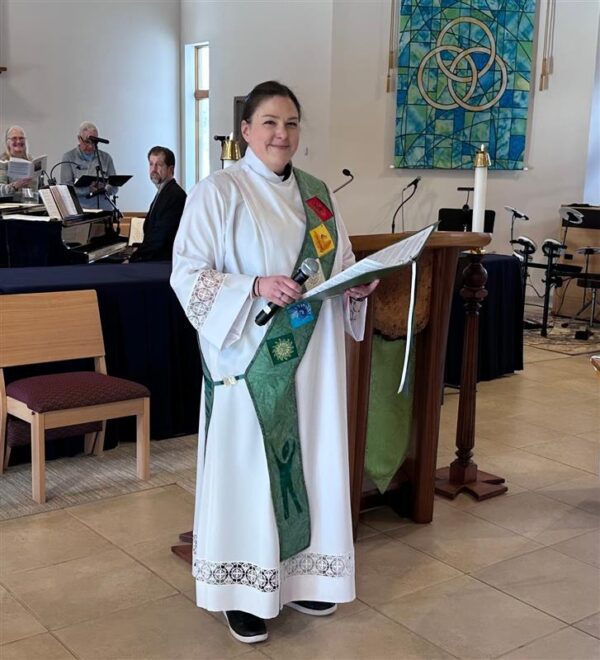
Now, Ali travels throughout the five counties KenCrest serves in Pennsylvania, meeting with congregations and helping turn compassion into action. This might look like assisting church groups with assembling thank-you bags for Direct Service Providers, facilitating pastors visits to group homes, or walking with congregations as they increase the accessibility and inclusivity of their worship and community life for people with IDD. Last Advent, ten ELCA churches “adopted” 105 children from the Rev. Harvey Davis Family Fund, helping fulfill their Christmas wish lists.
Through her work, Ali continues to live out her ordination promise by sharing God’s love through both word and deed and strengthening the bonds between faith communities and the people KenCrest serves.
SPECIAL THANKS TO OUR ANNUAL SPONSORS
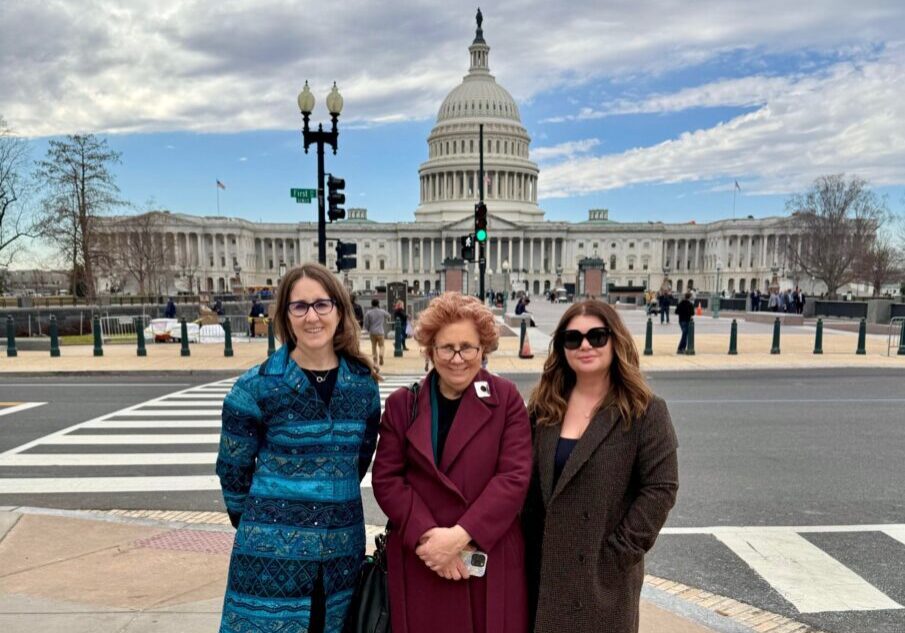
As KenCrest turns the page to an exciting new chapter, Aurora Kripa has stepped into the role of CEO and President. Leaders are shaped by more than their experience, they draw on their personal stories, passions, and perspectives to become who they are. I sat down with Aurora for a candid conversation, where I gained a glimpse into the influences that shape her leadership, the approach she brings to her work, and the inspirations that fuel her vision. Read on to get to know CEO Aurora Kripa, and discover how her perspective will shape KenCrest’s journey forward.
How do you envision KenCrest evolving over the next five years?
KenCrest has always grown by listening to its community, and that won’t change. Over the next five years, I see us continuing to build on our strong foundation while staying responsive to emerging needs and growing in the areas where there is need. My goal is to ensure KenCrest remains sustainable, innovative, and here for generations to come, just as it has been for more than 120 years.
What do you never leave home without?
My phone. It keeps me connected, and being reachable is important to me.
What motivates you most about leading an organization like KenCrest?
What motivates me most is the responsibility that comes with KenCrest’s legacy. This isn’t something I take lightly. We’ve been providing essential services to people for more than 120 years. Leading an organization like this means honoring that history while making sure we remain strong and sustainable for the future. I’m deeply motivated by the people who work here and the individuals and families we serve. Families need us, and our work matters. I see my role as being in service to them and doing my part to ensure KenCrest continues to thrive long after my time here.
How many languages do you speak, and has that shaped your leadership?
I speak three languages, Albanian, Italian, and English, and I also understand Spanish fairly well. English wasn’t my first language—it wasn’t even my second, I learned Italian before English—and navigating multiple languages from a young age shaped how I see the world. When I moved to the U.S., learning English in real-life conversations was a challenge, but it gave me a deep appreciation for communication, patience, and listening. That experience has absolutely influenced my leadership. It’s made me more aware of how people communicate differently and more thoughtful about creating spaces where everyone feels understood and included.
What values do you hope to strengthen at KenCrest?
Collaboration! Successful collaboration leads to creative solutions and better decision making. Along with that, respect and inclusivity are essential, creating an environment where different perspectives are welcomed, and people feel heard. I also believe in keeping things simple and straightforward. When expectations and values are easy to understand, it allows people to focus their energy on what really matters: doing meaningful work and supporting one another.
Outside of work, what brings you joy or balance?
Travel is one of my biggest joys; it’s how I recharge. I’m also consistent about wellness, including Pilates and the gym, which helps keep me grounded. And I’m always listening to an audiobook, sometimes more than one, depending on my mood. I have 349 books in my audible library, and I've listened to 99% of them. I like to have options, a business/motivational book, psychological thrillers, and witty/funny books.
What does community mean to you, and what role does KenCrest play in it?
Community is about connection and support, family, friends, neighbors, and coworkers. I grew up with a strong sense of community, and that’s something I value deeply. At KenCrest, I want everyone, individuals, families, and staff, to feel like they belong. Beyond that, our role is to continue identifying what our communities need and stepping up to meet those needs.
Who has influenced your leadership style the most?
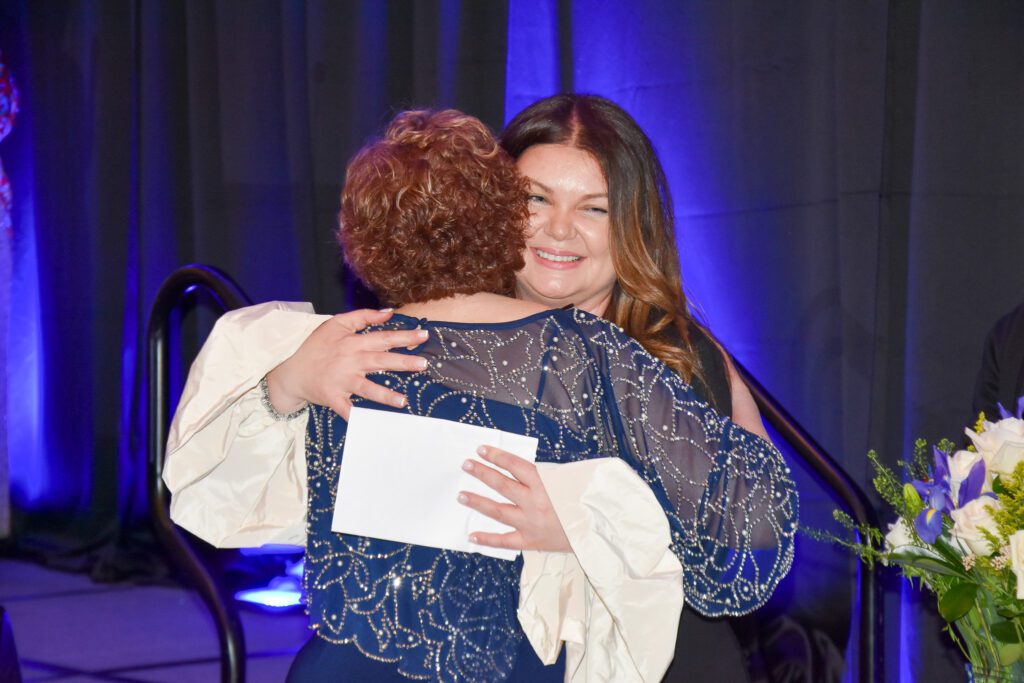
Marian [Baldini] has been a mentor and guide for many years, and I’ve learned so much from her. My parents have also been a major influence. Leading a team isn’t all that different from leading a family, it’s about balance, respect, and bringing different personalities together.
What’s something about you that might surprise people?
I’m a really good cook, and cooking for a crowd doesn’t intimidate me at all. Dinner for 30? No problem! I don’t shy away from big challenges. If something needs to get done, I’ll figure it out.
Why is staying connected to staff at all levels important to you as a leader?
Staying connected to staff at all levels is essential to me because it’s the only way to truly understand what’s happening across the organization. The people doing the work every day often have the clearest insight into what’s working, what’s challenging, and where we can do better. I want people to feel comfortable reaching out, sharing ideas, or letting me know what’s going on, big or small. I never want to be disconnected or behind closed doors. Being accessible helps me lead more thoughtfully and ensures we’re making decisions that reflect real experiences across KenCrest.
As I spoke with Aurora Kripa about stepping into the CEO role, it was clear how deeply she honors KenCrest’s history and looks ahead to the organization's future. She shared her commitment to listening, collaborating, and building meaningful connections. Hearing her vision firsthand was energizing and offered a compelling glimpse into the direction she hopes to lead KenCrest. With Aurora at the helm, the path ahead feels bright and full of possibility.
Recognizing the Direct Support Workforce
By Chip Riddlerberger
Director of Government Relations and Advocacy
What’s the Issue?
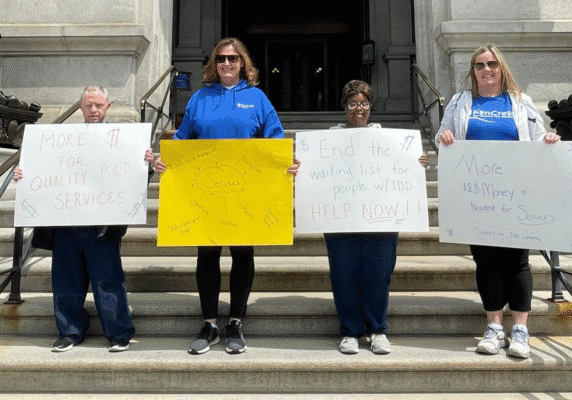
Every day, Direct Support Professionals (DSPs) help people with intellectual and developmental disabilities (I/DD) prepare for work, cook meals, attend doctor's appointments, and participate in their communities. They build real relationships and make everyday life possible. But in federal workforce data, DSPs are not counted as their own profession. Instead, they are grouped with many other healthcare jobs. A bill called the Recognizing the Role of Direct Support Professionals Act (H.R. 6137/S. 3211) would change that by creating a separate job category just for DSPs in the classification system used by federal agencies to collect and disseminate data, the Standard Occupational Classification (SOC)
Why It Matters
What You Can Do
You can help by learning more about this bill and why it matters. Read ANCOR’s official statement to understand how this change could support DSPs and the people they serve. If you would like to get involved or have questions about KenCrest’s advocacy work, contact Chip Riddleberger, Director of Government Relations & Advocacy, at Chip.Riddleberger@kencrest.org or 215.407.7539. Small steps like these can help make sure DSPs are recognized, and supported, for the essential work they do.
For one Philadelphia parent, the school day didn’t bring comfort, but dread. Her phone never left her hand. In meetings. In grocery store aisles. Even at lunch. Any vibration could mean another call, another crisis; another call that her preschooler needed to be picked up again.
“My child was expelled from three preschools,” says Dr. Maryann McEvoy, the Vice President of Business Development at KenCrest. “I was in constant fight-or-flight mode, terrified about what was happening at school.”
This is a familiar reality for many families of children with autism and other developmental differences. Preschool expulsion, often triggered by challenging behaviors, is more than a disruption; it’s a destabilizing trauma that ripples through entire households.
“My husband actually lost his job at one point,” she says. “Preschool suspension has ripple effects that extend far beyond a missed school day. For young children, it can shape how they view school and themselves. For families, it often means scrambling for care, missed work, and difficult choices that no family should have to make because a four-year-old is struggling. These early experiences matter, and they demand early, compassionate support.”
At the center of the conflict wasn’t a lack of love or effort. It was a system unprepared to support young children navigating big emotions, trauma, or unmet needs, one that too often responds to behavior with removal instead of understanding.
When Support is Missing, Everyone Feels It
For families like Maryann's, the reality of preschool expulsion is more than just statistics; it’s a daily struggle that shapes the lives of both children and adults. When a child is suspended or expelled from preschool, their future can be profoundly affected. Research shows that these children are at higher risk of distrusting authority, disengaging from school, and facing academic challenges later on. Meanwhile, teachers, often expected to manage increasingly complex behaviors, find themselves overwhelmed and unsupported, lacking the resources or training to respond effectively.
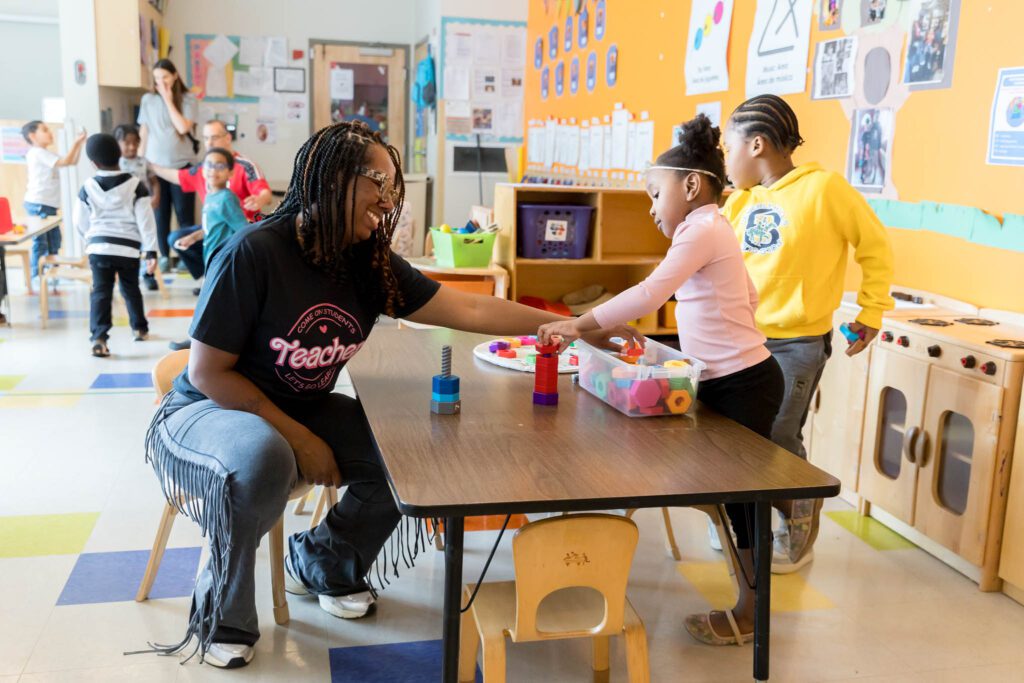
KenCrest’s SWIFT Support program was designed to meet families and educators at this critical crossroads, before a child is pushed out of the classroom. Instead of removing children in crisis, SWIFT offers trauma-informed support right inside preschool classrooms. Rather than treating behavior as willful misbehavior, the approach looks at what a child may be reacting to and helps adults respond in ways that calm the child and build stability. Specialists work hand-in-hand with teachers, seeking to understand the reasons behind challenging behaviors and finding solutions that keep children regulated, connected, and learning.
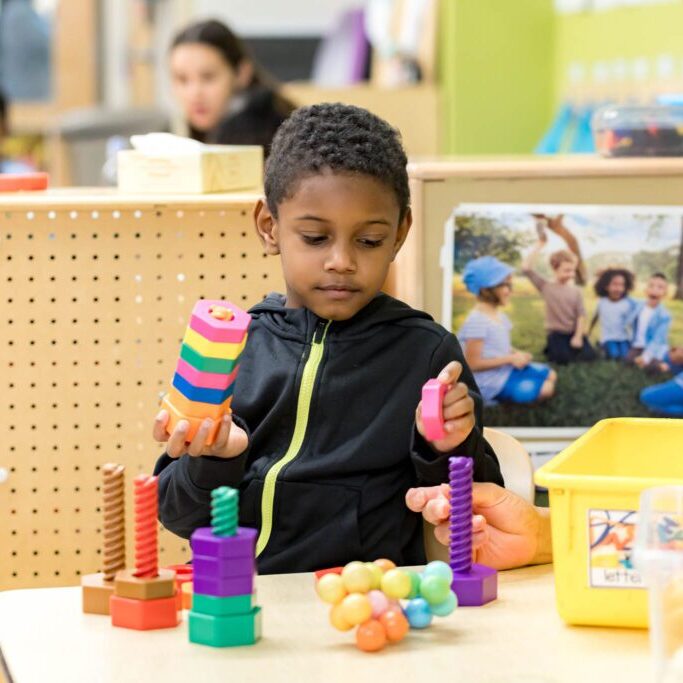
“We teach teachers that just because a child is struggling, it doesn’t mean they’re failing,” says Erin Donahue, leader of the SWIFT program. “It’s about understanding how a child feels and helping them communicate safely.” She recalls one teacher who dreaded transition time. “When we realized the child became upset because he couldn’t choose his activity, we let him choose. He transitioned beautifully. It was a lightbulb moment.” Small, person-centered changes like these help transform moments of frustration into opportunities for empathy and growth.
SWIFT’s instructional approach is short-term but impactful, offering up to ten hours of focused support in each classroom, especially during mornings, transitions, circle time, and free play—the busiest and most challenging parts of the day. Specialists observe and model strategies in real time, coaching teachers through moments that might otherwise feel overwhelming. At the heart of the program is a powerful shift in perspective: challenging behavior isn’t defiance—it’s communication.
But in 2023, SWIFT’s reach was limited when Pennsylvania shifted to state-funded rapid response grants for early childhood behavioral support, which meant that now services depended on short-term, grant-based funding rather than an ongoing support model. When those funds expired in December and weren’t renewed, many schools—and the families they serve—were left without the help they desperately needed.

From Crisis Response to a Growing Movement
A new grant from the William Penn Foundation is helping KenCrest close that gap and build something stronger in its place, giving parents like Dr. Maryann McEvoy, and so many others facing the threat of preschool expulsion, a real lifeline.
The funding allows KenCrest’s SWIFT specialists to visit classrooms in Philadelphia to provide direct support for children most at risk. For families who have lived through the anxiety of constant phone calls and emergency pickups, this means fewer moments of dread and more opportunities for stability. Now, instead of fearing another expulsion, parents can see their children welcomed and supported.
But the impact goes deeper. The grant also fuels long-term change by launching a Educator Certification Program that spans 12 months and, beginning in January, will allowup to 30 Philadelphia schools to each send one person—often a leader who understands the daily realities of families—to receive in-depth SWIFT Support training in trauma-informed practices, co-regulation, and relationship-based behavior support. This investment means that expertise will live within the 30 Philadelphia schools’ walls, making help immediate and sustainable for every child and parent in need.
"For me, it’s exciting. The biggest thing is that it’s filling a need that was always there. I saw what was happening to kids and families, and how devastating it was. To see that need now being addressed, with kids being more successful and families able to relax a little, it really means a lot to me, and it continues to mean a lot as I see what’s happening."
Roseann Adamo, creator of the SWIFT Support program
For Maryann and parents like her, this kind of support is transformative. In a preschool community that chooses empathy over exclusion, children who were once seen as problems are finally understood. “He was embraced. He was accepted,” she shares about her son’s experience. “For the first time, I felt safe.” That sense of safety lets families begin to heal, turning school into a place of trust, not trauma.
Today, her son is nine years old, thriving in school, playing hockey, and making lasting friendships. The lessons he learned, belonging, support, and the chance to succeed, have redefined both his and his family’s future. For all the parents who have lived in fear, the William Penn Foundation’s grant offers hope: a pathway towards healing, connection, and a promise that no child will be left behind.
Though the Foundation’s funding is dedicated to Philadelphia, it provides the stability KenCrest needs to strengthen and grow SWIFT’s reach. Already, the program has expanded beyond the city, with services active in Maryland and new beginnings in New Jersey. As the training and certification grow, more parents and children will benefit from a support system designed to meet them where they are, offering not just intervention, but belonging.
For KenCrest leaders, the hope is that SWIFT will become the norm: a standard, not an exception, woven into how early childhood education understands and uplifts every child and family. It’s a future where preschool expulsions are rare, teachers feel equipped, and parents like Maryann can finally put down their phones, confident their children are safe and supported.
Meet Wendy Parsons, the Chief Philanthropy Officer at KenCrest
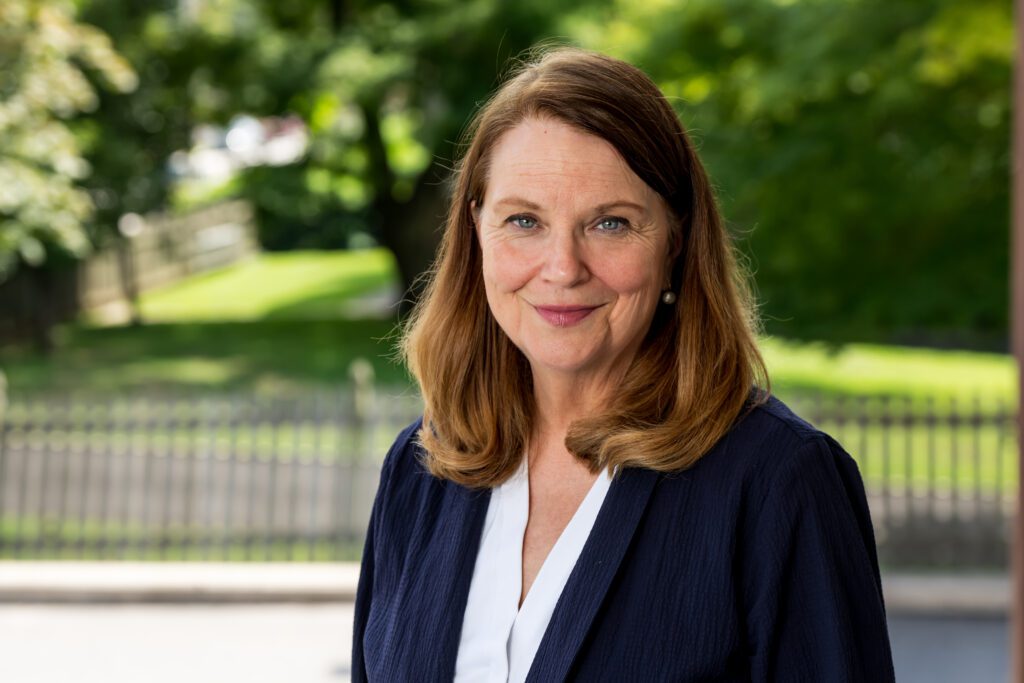
When Wendy Parsons joined KenCrest as Chief Philanthropy Officer in January 2026, she brought more than two decades of experience advancing mission-driven programs in higher education and healthcare. But for Wendy, the heart of philanthropy is simple: it’s about connecting people to purpose, and using generosity to create opportunity.
“What feels more meaningful to me,” Wendy shares, “is building relationships rooted in shared purpose. Philanthropy isn’t simply about raising dollars; it’s about inviting people into partnership. When donors, board members, corporate leaders, and community partners connect their values to our mission, that’s when transformational impact happens.”
Connecting Donors to Real Impact
As she begins her tenure, Wendy is focused on helping supporters see how their generosity directly changes lives. She wants to grow the individual giving program, strengthen corporate and foundation partnerships, and enhance donor stewardship, so every gift feels tangible and meaningful.
“Donors truly make a difference at KenCrest,” Wendy shares. “Every charitable gift helps expand our programs in innovation, technology, and workforce development, all areas that directly increase independence and quality of life for the individuals and families we serve.” By sharing the stories behind the programs, she helps donors understand how their support makes a real difference in people’s everyday lives.
Strengthening Partnerships to Support the Mission
Wendy is especially energized by the opportunity to deepen community partnerships and share the stories that bring KenCrest’s impact to life. “When people truly understand what’s possible, when they meet the individuals, whose lives are being transformed, they want to be part of that story,” she says.
For Wendy, philanthropy is about connection: aligning generosity with purpose, so every gift supports a future where individuals of all abilities are empowered, included, and supported. She collaborates closely with President and CEO Aurora Kripa and community partners to ensure that KenCrest has the resources needed to sustain programs, expand opportunities, and help families thrive.
When Charles “Chuck” Becker walks into Flik at Merck, it’s impossible not to notice him. The bustling cafeteria hums with activity, but Chuck’s infectious smile and booming voice cut through the noise, warmly welcoming everyone. Customers call him a friend, colleagues call him family, and now, after 30 years on the job, Chuck is being celebrated for a career that’s as remarkable as it is inspiring.
Chuck’s journey began 30 years ago with the support of KenCrest’s employment program. Chuck was paired with a job coach, Debbie Bauer, who guided him through the early days, helping him navigate the workplace and develop confidence. Their partnership lasted for 12 years before Bauer retired.
Today, Chuck is more than just an employee; he’s a pillar of the Flik community. Working in the cafeteria, he connects with hundreds of customers every day, assigning them playful family nicknames like “brother,” “aunt,” or “sister,” building bonds that extend far beyond food service. And if you mention the Philadelphia Eagles, you’ll see his eyes light up. He has nicknamed coaches and players as if they were family too, and his passion for the team is legendary in the cafeteria.
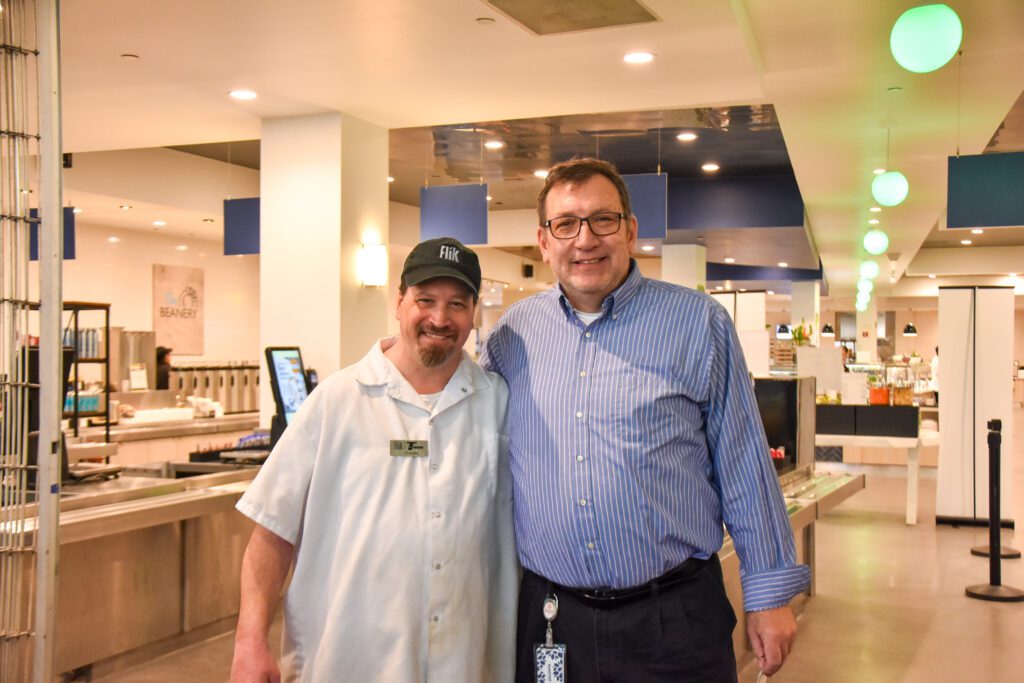
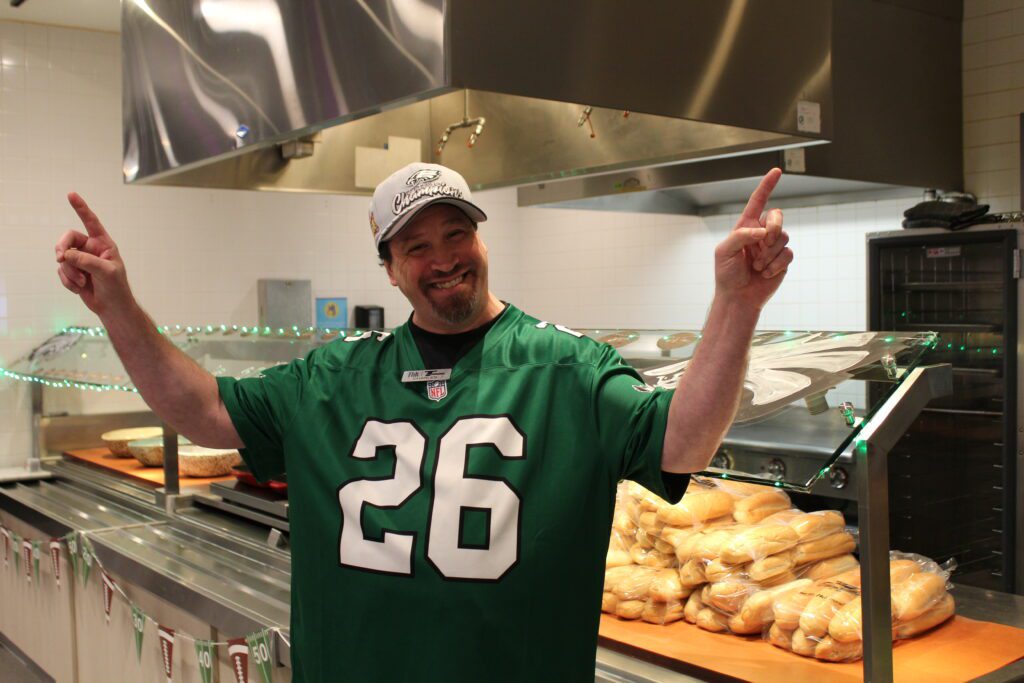
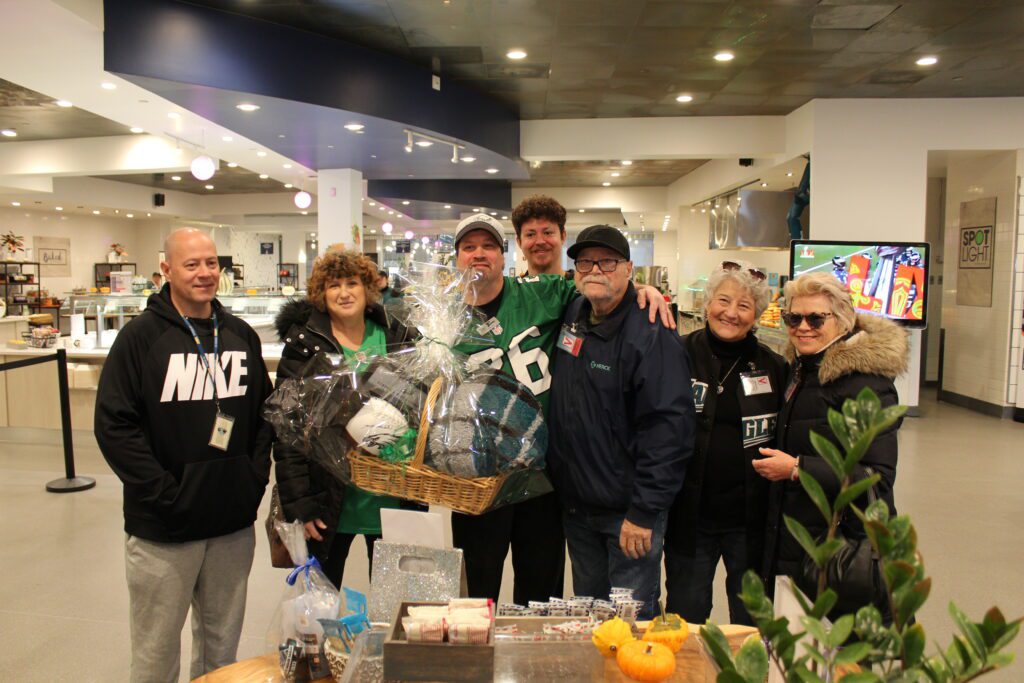
To mark his milestone work anniversary, Chuck was featured in a Spotlight Event on November 6, showcasing his grandma’s famous kielbasa and pierogies, a dish he’s been sharing for years. Family, friends, and mentors from KenCrest gathered to celebrate him, and a few special surprises awaited, including a signed football, a cozy blanket, and tokens of appreciation for a man who has spent three decades giving his best every day.
“I see my friends as my family,” Chuck says. “When I leave work, I always say goodbye to my family, and here, I have hundreds of people I can call family.” From his early days in the dishroom to becoming a trusted Room Supervisor and mentor, Chuck has exemplified hard work, leadership, and heart. His advice for anyone starting their first job? “Put your head down, take notes, and listen. You’ll learn so much that way.”
Chuck’s story is a reminder of what’s possible when people are valued for who they are, supported to do meaningful work, and given the chance to build relationships and make a lasting impact over time.