

A child refuses to sit during circle time. Another covers their ears when the classroom gets too loud. A student pushes an assignment away, struggles to come inside after recess, repeatedly leaves their seat, or becomes upset when a routine suddenly changes.
For parents and teachers, these moments can be challenging. The immediate question is often: How do we stop the behavior?
But another question may tell us more: What is this child trying to communicate?
A child refusing an activity may be overwhelmed by the task. The classroom could be too stimulating. They may not understand what is expected or have a way to communicate that they need help, a break, or more time.
Behavior gives us information, but it rarely tells the whole story.
Looking Beyond the Behavior
Applied Behavior Analysis, commonly known as ABA, has long been used to understand behavior and teach new skills, particularly for autistic children. ABA uses principles of learning and behavior to identify patterns and develop strategies that can support change.
Those principles can be useful. At KenCrest, the approach goes a step further by considering the whole child: their communication, environment, sensory needs, relationships, routines, preferences, strengths, and goals.
Instead of focusing only on“How do we change this behavior?” the conversation becomes“What might this child need, and how can we support them?”
That philosophy can be seen across KenCrest’s Early Intervention and SWIFT Support services.
Support Where Life Happens
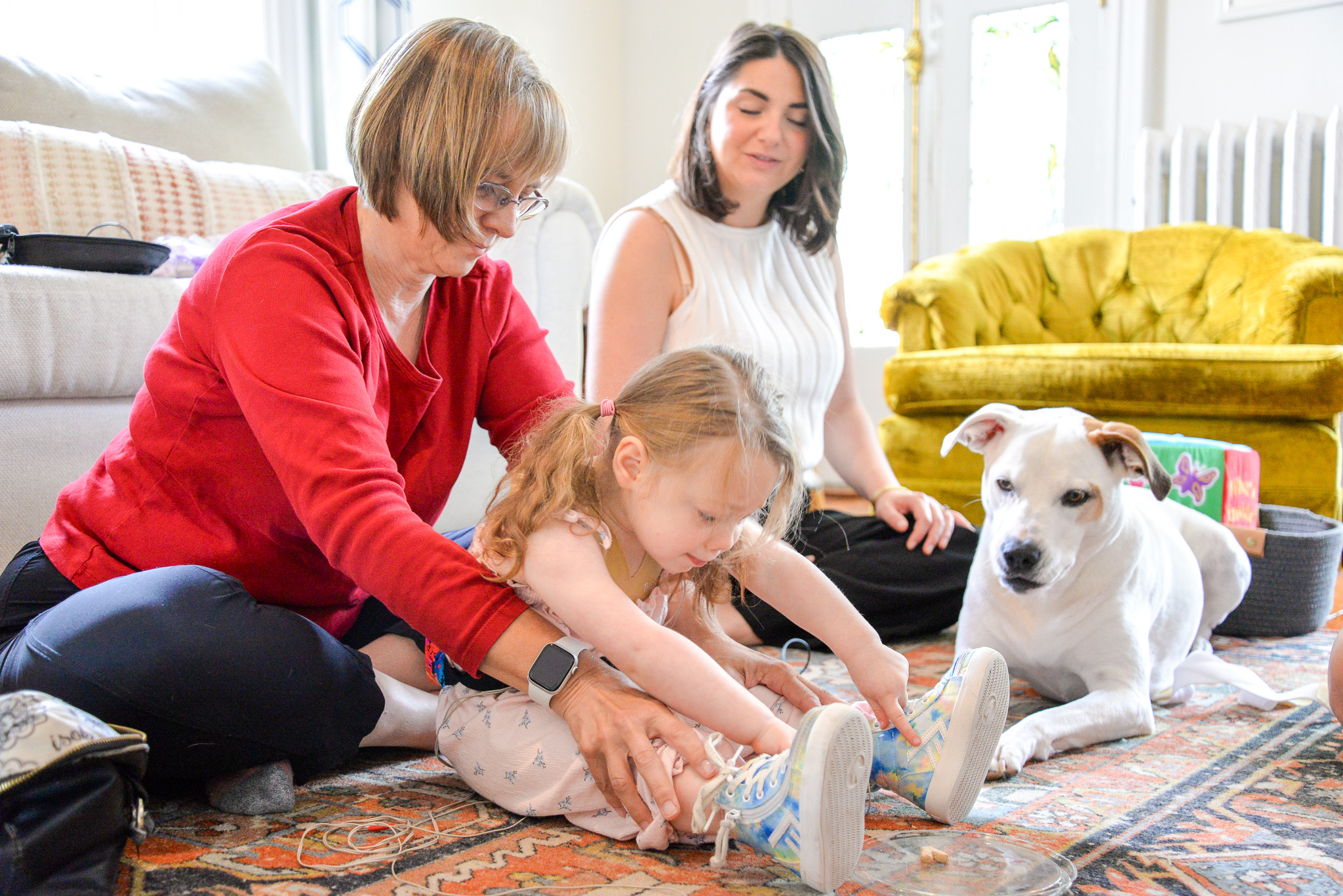
Through Early Intervention, professionals partner with families to support children within the routines and environments already part of their lives. Parents and caregivers bring their knowledge of the child, while Early Intervention professionals help families find practical strategies they can use during activities like playing, eating, getting dressed, communicating, and moving through transitions.
For preschool-age children experiencing challenges in the classroom, SWIFT Support brings a similar approach into early learning environments.
SWIFT partners with educators and families when children are experiencing frequent meltdowns or big reactions, difficulty communicating their needs, challenges with peers or group activities, early pickups, classroom removals, or the possibility of suspension. Rather than simply responding to the behavior, SWIFT professionals work alongside educators to understand what the child may be communicating and identify practical strategies that fit the child, educator, and classroom routine.
Consider a child who becomes upset every day when playtime ends.
Rather than focusing only on getting the child to move to the next activity, families and educators might ask what makes the transition difficult. Would an earlier warning help? Could a visual cue make the change more predictable? Is the next activity overwhelming? Does the child need another way to communicate that they are not ready?
Those questions create opportunities to understand the need behind the behavior and find strategies that can work throughout the child’s day.
Start With Curiosity
Interested in learning more?
Learn more about KenCrest’s Early Intervention and SWIFT Support services and how we partner with families and educators to help young children grow and thrive.
Read More Stories From KenCrest










Let's Keep in Touch
Join the KenCrest team and stay updated on the latest news in the disability community, inspiring stories, and ways you can help us make a difference in the lives of people with an intellectual or developmental disability.