

In the human service industry, many people we support have survived traumatic experiences that, according to the Substance Abuse and Mental Health Services Administration, result in physical, emotional, and/or life-threatening harm. In fact, according to the National Council for Behavioral Health, over 70 percent of adults (over 223 million people) in the United States experience trauma. As the industry has become aware of the impact of trauma, many organizations are seeing the value of trauma-informed care.
Transitioning to trauma-informed practices is necessary and part of creating positive change; however, it is only the beginning. Some general concepts of trauma-informed care include:
- Empowerment—a strengths-based approach
- Choice—giving control to the individual
- Collaboration—support team members working together
- Safety—creation of a physically and emotionally safe environment
- Trustworthiness—communicating clear expectations, roles and following through on promises (Harris & Fallot, 2006).
"Trauma-informed care is a service delivery approach focused on an understanding of and responsiveness to the impact of trauma. It promotes positive outcomes by emphasizing physical, psychological, and emotional safety and enhances well-being by empowering individuals to define their needs and goals and make choices about their care and services," writes TraumaPolicy.org.
Trauma-informed care isn’t just about focusing on the needs of a client. Organizations need to include client care and organizational components to become a trauma-informed care agency. This must include agencies valuing empathy over compliance. Focusing on empathy does not mean compliance stops. When a trauma-informed mindset shift happens, compliance and quality-of-life outcome rates naturally rise (Beck et al., 2022; Fernandez et al., 2023).
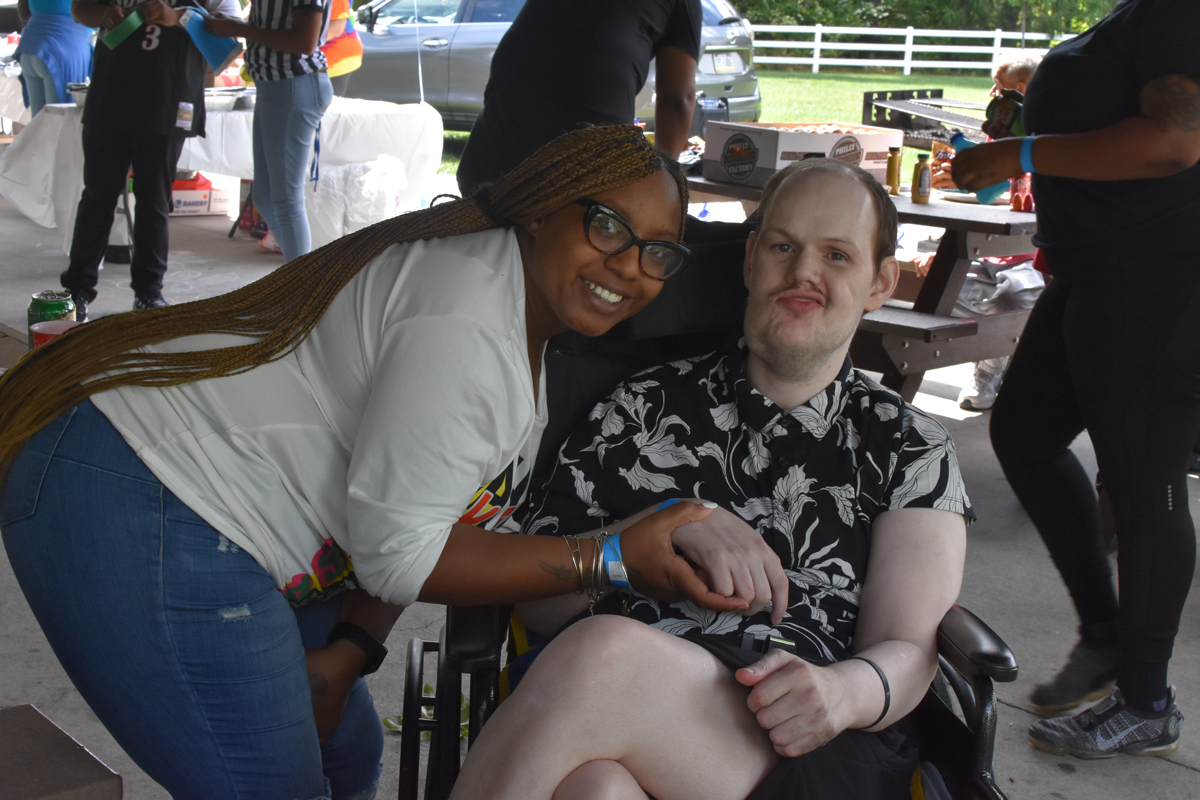
An individual KenCrest supports with their DSP. // Photo courtesy of KenCrest.
For example, imagine a client with an intellectual disability who chose not to shower for three days. Staff try offering options at all different times of day, but the client is did not want to shower that day and gets frustrated. He responds by throwing cushions, signaling distress when the conversation continues.
In these scenarios, staff stress typically rises and behaviorists get brought in when everyone is exhausted.
Now, imagine a trauma-informed and trauma-responsive workforce. The first night the client refuses to shower, the staff member can say, “hey, I completely honor your right to choose how and when you take care of your body.” They recognize there may be underlying emotions, past experiences, or sensory needs connected to the moment. So they need to use their trauma-informed tools to recognize how the client may feel.

The staff goes on to ask simple questions about what the two of them can do together so that the client feels grounded and safe, heard and seen by the staff. Later that evening, the client willingly shows the staff member a bruise and communicates that it happened with their family a couple of days ago. Using those trauma-informed tools, the staff member was able to prioritize that client which made them feel safe enough to come forward with an issue. They can then file a report in a calm setting, using empathy over compliance.
In a trauma-informed agency, the story does not end there. The staff member receives regular supervision and check-ins to discuss what happened and how to receive a session with a therapist or counselor to process the experience as needed. The supervisor regularly checks in to see if the staff or clients need anything, which minimizes the effects of potential vicarious trauma (trauma experienced by those witnessing or hearing about traumatic events of others) and increases staff retention.
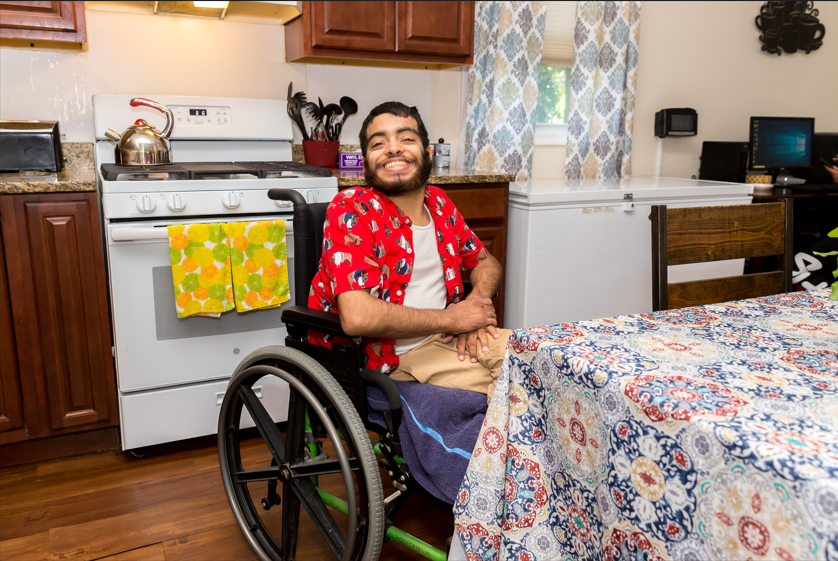
Using agency-wide trauma-informed practices within a trauma-responsive workforce, benefits both the people we support and our employees during any time of need.
According to CHCS.org, “building foundational awareness of trauma-informed approaches should begin early in a provider’s education and be reinforced through continuing education. … Collectively, policymakers, providers, and payers have a compelling opportunity to confront the short- and long-term impacts of trauma and pursue the opportunity that trauma-informed care presents to improve health outcomes and decrease costs.”
In the end, the benefits of trauma-informed care far outweigh the costs. We just have to apply it to everyone we serve and the people directly and indirectly supporting them.
References:
Beck, E., Carmichael, D., Blanton, S., Bride, B., Mobley, A., & DiGirolamo, A. (2022). Toward a trauma-informed state: An exploration of a training collaborative. Traumatology, 28(4), 471-479. http://dx.doi.org/10.1037/trm0000351
Bosk, E. A., Williams-Butler, A., Ruisard, D., & MacKenzie, M. J. (2020). Frontline staff characteristics and capacity for trauma-informed care: Implicaitons for the child welfare workforce. Child Abuse & Neglect, 110(3), https://doi.org/10.1016/j.chiabu.2020.104536
Fernandez, V., Gausereide-Corral, M., Valiente, C., & Sanchez-Iglesias, I. (January 23, 2023). Effectiveness of trauma-informed care interventions at the organizational level: A systemic review. Psychological Services. http://dx.doi.org/10.1037/ser0000737
Harris, M., & Fallot, R. D. (2006). Envisioning a trauma-informed service system: A vital paradigm shift. New Directions for Student Leadership, 2001(89), 3-22. https://doi.org/10.1002/yd.23320018903
McNally, P., Irvine, M., Taggart, L., Shevlin, M., & Kessler, J. (2022). Exploring the knowledge base of trauma and trauma informed care of staff working in community residential accommodation for adults with an intellectual disability. Journal of Applied Research in Intellectual Disabilities, 35(5), 1162-1173. https://doi.org/10.1111/jar.13002
Menschner, C., & Maul, A. (2016). Issue brief: Key ingredients for successful trauma-informed care implementation. https://www.samhsa.gov/sites/default/files/programs_campaigns/childrens_mental_health/atc-whitepaper-040616.pdf
National Center for Injury Prevention and Control, Division of Violence Prevention. (April 6, 2022). Fast facts: Preventing adverse childhood experiences. Centers for Disease Control and Prevention. https://www.cdc.gov/violenceprevention/aces/fastfact.html
National Council for Behavioral Health. (08/2022). How to Manage Trauma. https://www.thenationalcouncil.org/wp-content/uploads/2022/08/Trauma-infographic.pdf
Substance Abuse and Mental Health Services Administration. (9/27/2022). Trauma and Violence. samhsa.gov/trauma-violence
Read More Stories From KenCrest







Let's Keep in Touch
Join the KenCrest team and stay updated on the latest news in the disability community, inspiring stories, and ways you can help us make a difference in the lives of people with an intellectual or developmental disability.